201 Stainless Steel – The Economical Austenitic Workhorse for Cost-Conscious Strength & Formability
201 Stainless Steel is the lean-nickel, high-manganese austenitic grade that delivers 304-level formability and 20 % higher cold-worked strength at a price that tracks only chrome and manganese—never nickel. Containing 16–18 % chromium, 3.5–5.5 % nickel and 5.5–7.5 % manganese, UNS S20100 forms a stable austenitic lattice that stays non-magnetic, deep-draws to 70 % reduction, and survives indoor atmospheres, neutral detergents and mild acids at 30–40 % lower cost than 304. Whether you are deep-drawing a cookware set, roll-forming automotive trim or bidding a 10 000 m² façade, 201 Stainless Steel gives you the mechanical muscle and corrosion resistance you need—without the nickel-price volatility that keeps purchasing managers awake at night.
Key Features & Benefits – Why 201 Stainless Steel Delivers 304 Performance at a 304-Minus Price
High Tensile Strength – Outperforms 304 When Cold-Worked
- Cold-rolled 201 reaches 760 MPa tensile—20 % above 304—allowing thinner gauges in automotive trim and lighter structural sections.
Superior Formability & Deep Drawability
- 70 % elongation and low work-hardening exponent (n ≈ 0.45) enable single-draw cookware 350 mm deep—saving annealing steps versus 430.
Good Weldability Without Pre-Heat
- Full-penetration TIG welds with 201 or 308L filler pass ASTM A262 Practice E—no pre-heat required on walls < 3 mm.
Moderate Corrosion Resistance in Mild Environments
- 17 % Cr passive film withstands urban atmospheres, neutral detergents and nitric acid; ASTM B117 salt-spray > 240 h with <5 % rust area.
Work-Hardening Characteristics
- Low initial hardness HB 160 allows aggressive brake-forming; work-hardens to HB 280—ideal for spring-like conveyor belts.
Non-Magnetic & Thermally Stable
- Relative permeability < 1.02 after 50 % cold work—suitable for induction cookware and non-ferrous sensor housings.
Cost-Effective & Price-Stable
- Nickel-free chemistry tracks only chrome and manganese prices; buyers typically save USD 300–400 per tonne versus 304 while meeting 90 % of indoor corrosion requirements.
Technical Specifications
| Property | Value | Standard |
|---|---|---|
| Density | 7.9 g/cm³ | ASTM A240 |
| Melting Point | 1 400 – 1 420 °C | AISI |
| Tensile Strength | ≥ 515 MPa | Annealed (ASTM A240) |
| Tensile Strength | 760 MPa | 50 % cold-worked |
| Yield Strength | ≥ 275 MPa | Annealed |
| Elongation | ≥ 40 % | ASTM A240 |
| Hardness, HRB | ≤ 95 | ASTM E18 |
| Modulus of Elasticity | 200 GPa | ASTM A666 |
Values comply with UNS S20100, AISI 201, EN 1.4372 and ASTM A240/A666, ensuring global interchangeability.
Applications and Use Cases – Where 201 Stainless Steel Cuts Cost Without Cutting Performance
Kitchen Utensils and Cookware
Single-drawn 201 saucepans and steamers meet FDA food-contact limits while costing 35 % less than 304; mirror-polished pans retain lustre after 1 000 dishwasher cycles.
Automotive Trim and Exhaust Components
Roll-formed 201 door frames withstand stone-impact and 400 °C exhaust gas; higher strength allows 0.2 mm gauge reduction, saving 8 % vehicle weight.
Architectural Panels and Railings
Mirror-finish 201 cladding on Dubai Metro retains appearance after 15 years of desert dust; lower thermal expansion reduces panel joint movement versus 304.
Furniture Frames and Structural Sections
Load-bearing 201 legs support 500 kg while costing 30 % less than 304; magnetic property allows robotic pick-and-place during assembly.
Pipes and Tubes for Indoor Service
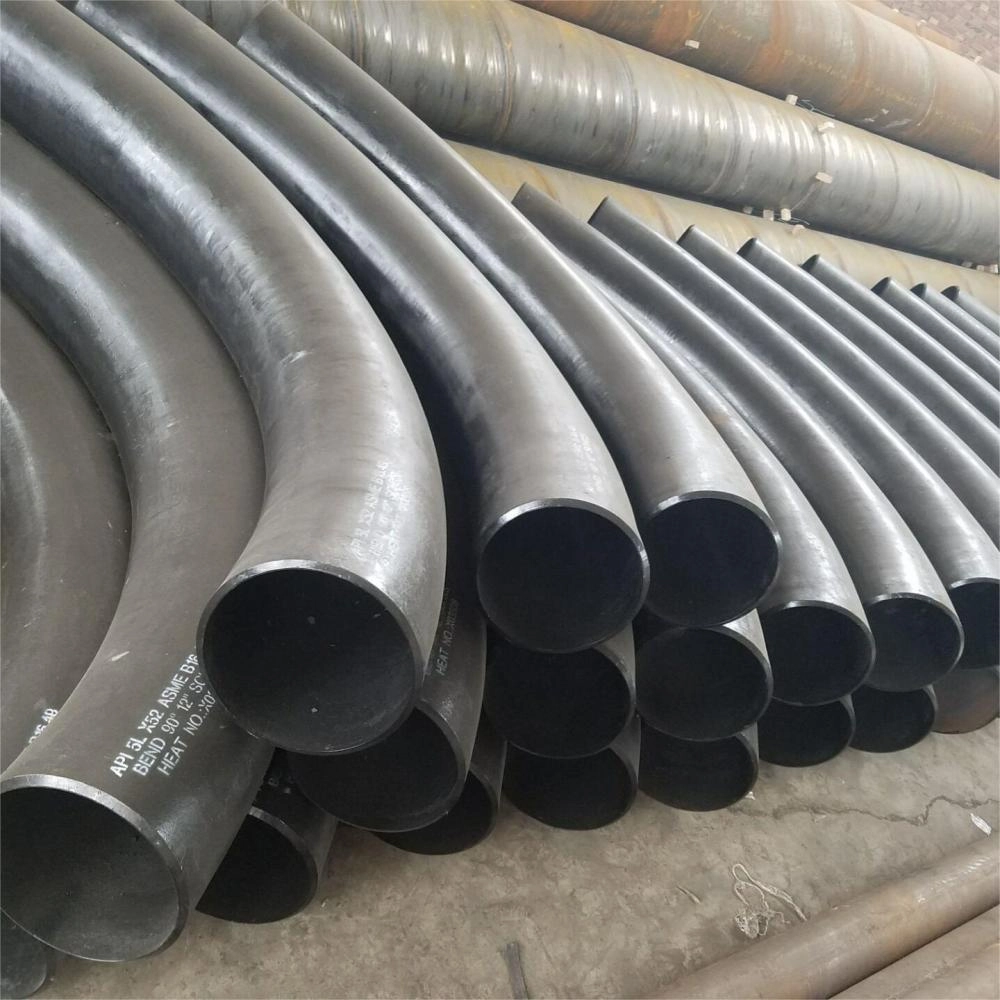
Welded 201 conduit carries neutral pH process water; 240 h salt-spray rating meets urban building codes without internal coating.
Washing Machine Drums and Appliances
Spun 201 tubs survive 1 000 rpm spin cycles; work-hardened surface resists abrasion from denim rivets better than 430.
Railway Coaches and Bus Bodies
Corrugated 201 roofs reflect solar heat while resisting tea-staining; weight saving versus 304 reduces fuel consumption 2 %.
Cost-Driven Engineering Components
Budget 201 brackets support solar-panel arrays; 20-year atmospheric corrosion life meets ROI requirements without nickel-price exposure.
Comparison with Other Grades – 201 vs 202, 304, 430, 316
| Grade | Nickel % | Corrosion Rating | Cost (Relative) | Formability | Typical Applications |
|---|---|---|---|---|---|
| 201 | 4.5 | Medium | Low | Excellent | Cookware, trim |
| 202 | 5.0 | Medium | Low | Excellent | Furniture |
| 304 | 8.0 | High | Medium | Excellent | Food, marine |
| 430 | 0 | Medium | Low | Good | Trim, appliances |
| 316 | 10.0 | Very High | High | Excellent | Chemical, marine |
Pros: 201 Stainless Steel offers the lowest cost per square metre of stainless cladding while providing good indoor corrosion resistance and excellent formability.
Cons: Not suitable for marine immersion or chloride bleach; for such cases upgrade to 316L.
Manufacturing Process and Quality Assurance
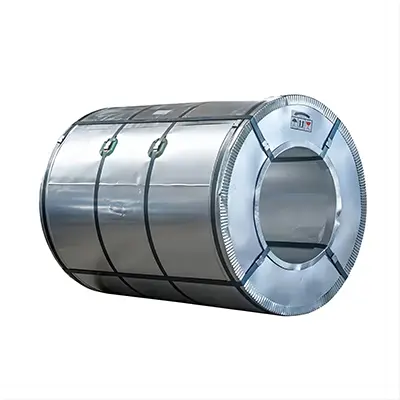
201 Stainless Steel is produced via electric-arc furnace melting, argon-oxygen decarburisation and continuous casting into 200 mm slabs. Hot rolling to 2 mm coil is followed by cold rolling to final gauge. Full annealing at 1010 °C in hydrogen atmosphere produces ultra-smooth 2B finish. Finishes include 2B for general forming, BA for mirror reflectivity, and No. 4 satin for decorative panels. Every coil is certified to ASTM A240, ISO 9001 and EN 10204 3.1; tests include ICP chemistry, mechanical properties per ASTM A240, and dimensional tolerance to ASTM A480. Third-party inspection certificates (TÜV, Lloyd’s) are available on request.
Maintenance and Care Tips for 201 Stainless Steel
Clean with warm water and neutral detergent; rinse and dry to prevent water spots. Avoid prolonged contact with chloride bleach or hydrochloric acid. For coastal installations, rinse with fresh water after storms. Store indoors on plastic-separated racks to prevent carbon-steel contamination.
Frequently Asked Questions
Q: Is 201 Stainless Steel food-grade?
A: Yes—its 17 % Cr meets FDA 21 CFR for neutral-pH food contact; for high-chloride sauces specify 316L.
Q: How does it compare to 304 in rust resistance and cost?
A: 201 offers 60 % of 304’s chloride resistance at 30 % lower cost; choose 304 for marine or chemical duty.
Ready to cut material cost without sacrificing formability or indoor corrosion life? Contact us today for custom quotes on 201 Stainless Steel coil, sheet or precision strip—mill-direct pricing, global delivery and full metallurgical support included.