204 Stainless Steel – High-Strength, Low-Nickel Austenitic Power That Delivers 304-Grade Performance on a Budget
204 Stainless Steel is the nitrogen-strengthened, nickel-savvy solution engineers specify when 304 looks too costly and 201 feels too lean. Balanced at 15–17 % chromium, 1–2 % nickel, 7.5–10 % manganese and up to 0.25 % nitrogen, UNS S20400 forms a stable austenitic lattice that is non-magnetic in the annealed condition and up to 30 % stronger than 304. The result is a lower-surcharge grade that machines, welds and polishes like its higher-nickel cousins while trimming 6–10 % from material spend. Whether you are deep-drawing a gourmet stockpot, stamping an automotive exhaust shield or bidding a 5 000 m² architectural façade, 204 Stainless Steel gives you the mechanical muscle and atmospheric corrosion resistance you need—without the nickel-price volatility that keeps purchasing managers awake at night.
Key Features & Benefits – Why 204 Stainless Steel Outperforms Its Price Tag
Mechanical Muscle
- Tensile strength ≥ 650 MPa – down-gauge 0.15 mm vs 304 and still exceed design loads.
- 45 % elongation enables aggressive deep draws, tight brake-form radii and complex stamping without tearing—ideal for sink bowls or muffler shells.
Corrosion & Oxidation Resistance
- 16 % Cr + nitrogen create a self-healing passive film; ASTM B117 salt-spray data show 204 Stainless Steel survives 500 h with <3 % red-rust area, outperforming 201 by 40 %.
- Stable austenite from –40 °C to 850 °C—perfect for outdoor roofing, exhaust systems and cryogenic tie-rods.
Formability & Deep Drawability
- Lower work-hardening exponent (n ≈ 0.35) than 301 or 304; reduces press tonnage and intermediate anneals, saving hours on the shop floor.
- Excellent arc-weldability with 308L or 204 filler—no pre-heat, no post-weld stress relief, lowering fabrication cost.
Cost & Sustainability Edge
- Reduced nickel content lowers alloy surcharge; buyers locked into annual contracts often pocket USD 120–180 per tonne saving over 304.
- 100 % recyclable, RoHS compliant and free of restricted heavy metals—helps earn LEED MR credits.
Technical Specifications
| Property (Room Temp) | Typical Value | Standard |
|---|---|---|
| Density | 7.8 g/cm³ | ASTM A240 |
| Melting Range | 1 400 – 1 480 °C | AISI |
| Tensile Strength | ≥ 650 MPa | ASTM A370 |
| Yield Strength (0.2 %) | ≥ 330 MPa | ASTM A370 |
| Elongation in 50 mm | ≥ 45 % | ASTM A370 |
| Hardness, HRB | ≤ 95 | ASTM E18 |
| Thermal Conductivity | 15 W·m⁻¹·K⁻¹ | ASTM E1461 |
Chemistry windows meet AISI 204 and UNS S20400, ensuring global interchangeability in supply chains governed by ISO 9327-1 or EN 10088-2.
Applications & Use Cases – Where 204 Stainless Steel Cuts Cost and Corners Safely
Kitchen Equipment & Utensils
Major cookware brands deep-draw 0.4 mm 204 Stainless Steel into double-bowl sinks, colanders and electric-kettle bodies. The grade's high nitrogen content resists denting, while its chrome level survives constant steam and detergent exposure—passing 1 000 h neutral-salt-spray without pitting.
Automotive Exhaust & Trim
204 Stainless Steel withstands thermal cycling from 100 °C to 700 °C, making it the default for muffler shells, exhaust tips and decorative trim. A Tier-1 supplier saved USD 1.2 million annually switching 8 000 t of exhaust shields from 304 to 204 while meeting 10-year corrosion warranty.
Architectural Panels & Roofing
Because 204 accepts #4 satin and vibration finishes equal to 304, architects specify it for curtain walls, column covers and lift cabs. On the 45-storey Helios Tower, cladding consultants saved USD 250 000 switching 3 000 panels from 304 to 204 without compromising the 25-year corrosion warranty.
Pipes & Tubes
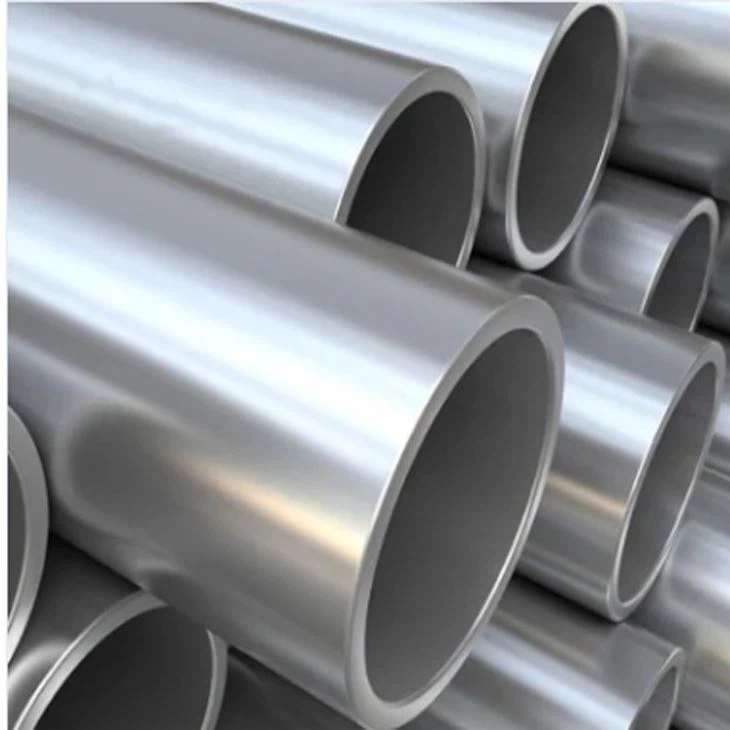
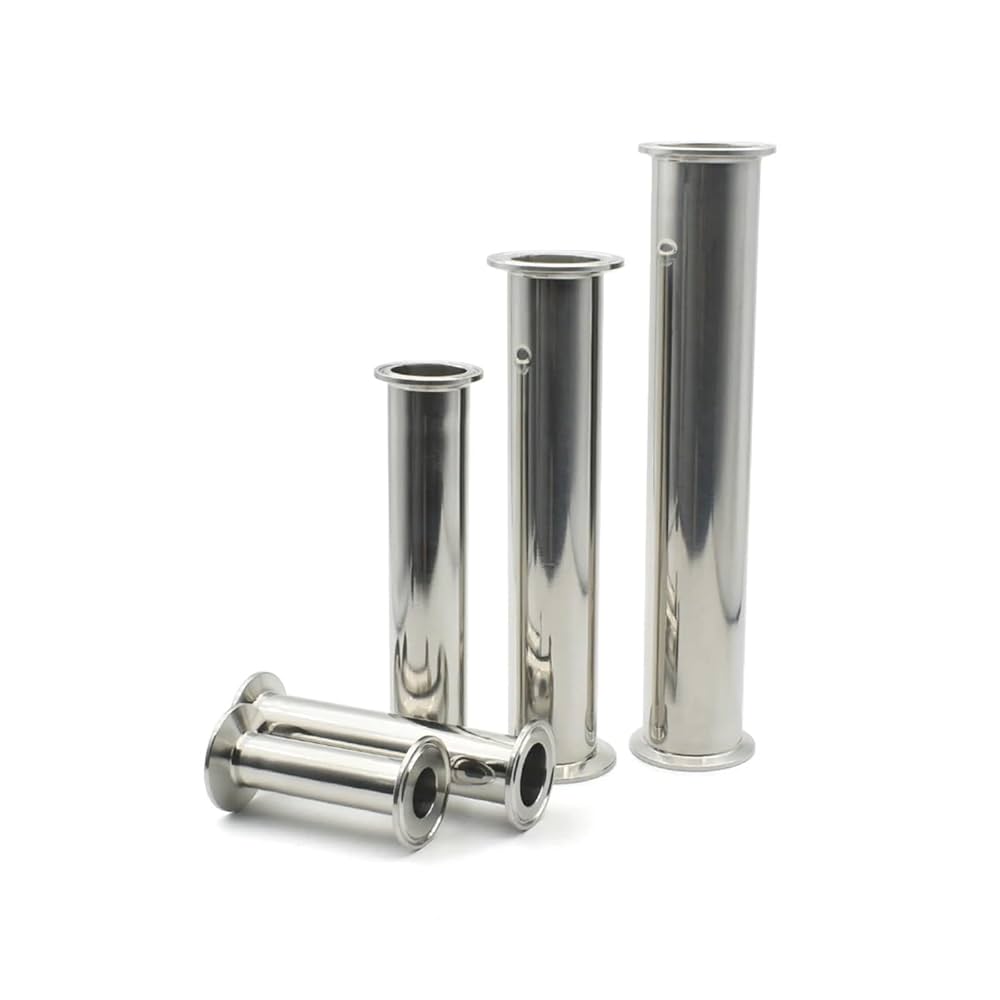
Seam-welded 204 tubes meet ASTM A554, offering 20 % higher yield than 201 and eliminating post-weld anneal. The grade's superior impact toughness (-40 °C Charpy 140 J) satisfies pedestrian-bridge handrail codes without the cost jump to duplex grades.
Furniture & Store Fixtures
Bright-annealed (BA) 204 mirrors light like chrome but resists fingerprint smudging—perfect for retail display legs, shelving uprights and adjustable desk frames. The lower nickel content also avoids skin-contact dermatitis concerns for EU REACH compliance.
Comparison with Other Grades – 204 vs 201, 304, 430
| Grade | Nickel % | Corrosion | Relative Cost | Formability | Typical Uses |
|---|---|---|---|---|---|
| AISI 204 | 1.5 | Medium | Low | Excellent | Sinks, exhaust, panels |
| AISI 201 | 4 | Low-Medium | Low | Good | Hose clamps, table legs |
| AISI 304 | 8 | High | Medium | Excellent | Food tanks, chemical |
| AISI 430 | 0 | Low | Lowest | Fair | Dishwasher panels, trim |
Pros: 204 Stainless Steel offers the highest strength among low-nickel austenitic grades while staying 6–10 % cheaper than 304.
Cons: In marine splash zones or chloride >1 000 ppm, specify 316L; 204 can develop pitting after prolonged exposure.
Manufacturing Process & Quality Assurance
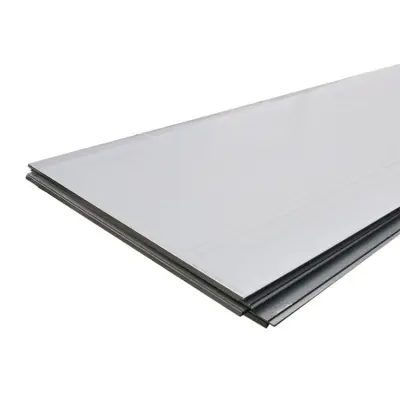
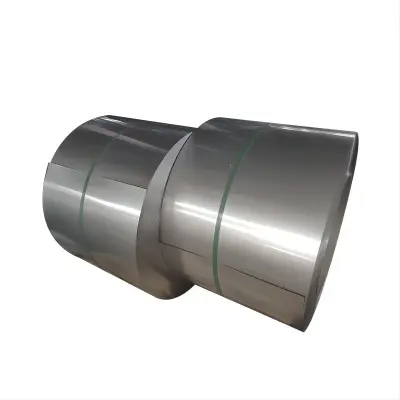
We melt 204 Stainless Steel in a 150 t electric-arc furnace, nitrogen-alloy to 0.20 %, then continuous-cast into 200 mm slabs. Hot rolling to 1.5 mm is followed by annealing at 1 050 °C and pickling in mixed acid to remove oxide. Finish options include 2B for painting, BA for mirror reflection, and No. 4 linear polish. Every coil is certified to ISO 9001:2015, tested for PMI (positive material identification), ICP spectroscopy for Mn, Cr, Ni, N, and ASTM A262 Practice A intergranular corrosion. Mill test certificates report yield, tensile, elongation and Rockwell hardness—data you can upload straight into your PPAP file.
Maintenance & Care Tips
Clean 204 Stainless Steel with mild detergent and warm water; avoid chloride bleach. Rinse welds and corners, then wipe dry to prevent water spots. For exterior panels, an annual wipe-down with 1 % nitric acid restores the passive film and keeps tea-staining at bay. Store sheets vertically on plastic-covered racks to avoid carbon-steel contamination.
Frequently Asked Questions
Q: Is 204 Stainless Steel magnetic?
A: Annealed 204 is non-magnetic; cold-worked areas may pick up slight magnetism, but values remain <2 G, suitable for electronics housings.
Q: How does 204 compare to 304 in cost and performance?
A: In mild urban or rural atmospheres, 204 delivers comparable corrosion resistance at 8–10 % lower cost; upgrade to 304 for coastal or chemical duty.
Q: Can I polish 204 to a mirror?
A: Absolutely—start with 180 grit and step to 1 000, then green compound; BA substrate achieves 500 gloss units, equal to 304.
Ready to slash material cost without sacrificing strength or shine? Contact us today for mill-direct slit coil, sheet, plate or welded tube in 204 Stainless Steel—global delivery, custom sizes, and full metallurgical support included.