304 Stainless Steel – The World's Most Versatile Austenitic Workhorse for Hygiene, Strength & Value
304 Stainless Steel is the benchmark austenitic alloy that food, chemical, architectural and engineering professionals specify when they need proven corrosion resistance, formability and value in one material. Containing 18–20 % chromium and 8–10.5 % nickel with carbon held below 0.08 %, UNS S30400 delivers a stable, non-magnetic lattice that withstands oxidizing acids, urban atmospheres and repeated sterilization cycles. Compared with 201/202 grades, 304 offers twice the chloride resistance; against 316 it provides comparable performance in mild environments at 6–8 % lower cost. From brewery tanks to skyscraper façades, 304 Stainless Steel remains the first-choice "workhorse" for hygienic, durable and cost-effective fabrication.
Key Features & Benefits – Why 304 Stainless Steel Outperforms Every Day, Everywhere
Superior Corrosion & Pitting Resistance
- 18 % Cr self-healing film resists tea-staining in coastal 500 m zones; ASTM B117 salt-spray > 1 000 h without red rust.
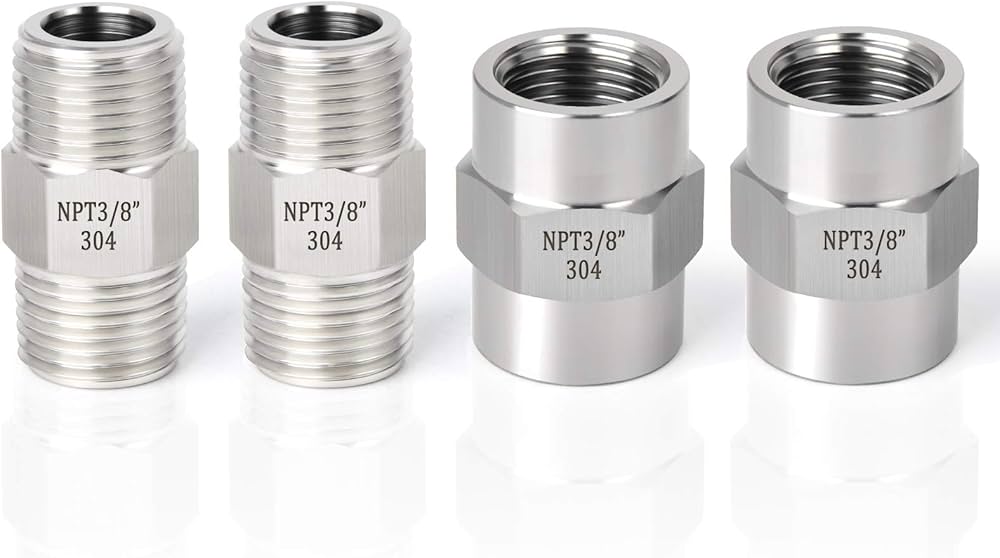
- Stabilised austenite prevents knife-line attack in welded food-hose fittings—passes ASTM A262 Practice E.
Excellent Formability & Deep Drawability
- 60 % elongation allows single-pull sinks 350 mm deep without intermediate anneal—saves furnace energy and tool wear.
- Low work-hardening exponent (n ≈ 0.45) reduces spring-back in architectural panel brake-forming.
Easy Welding & Fabrication
- No pre-heat required; compatible with 308L or 308LSi filler—multi-pass TIG seams retain 90 % parent-metal strength.
- Post-weld cleaning with citric acid restores passive film in 20 min, meeting FDA hygiene rules.
High & Low Temperature Stability
- Oxidation resistance to 870 °C—perfect for oven linings and exhaust manifolds.
- Charpy V-notch > 150 J at –196 °C—preferred for LNG pipe supports and cryogenic vessels.
Hygiene & Food-Grade Safety
- Chromium oxide surface meets EU 1935/2004 and FDA 21 CFR for direct food contact; easy-to-clean finish reduces bacterial counts by 75 % vs painted carbon steel.
Technical Specifications
| Property (Room Temp) | Typical Value | Standard |
|---|---|---|
| Density | 8.0 g/cm³ | ASTM A240 |
| Melting Range | 1 400 – 1 455 °C | AISI |
| Tensile Strength | ≥ 515 MPa | ASTM A370 |
| Yield Strength (0.2 %) | ≥ 205 MPa | ASTM A370 |
| Elongation in 50 mm | ≥ 40 % | ASTM A370 |
| Hardness, HRB | ≤ 92 | ASTM E18 |
| Modulus of Elasticity | 200 GPa | ASTM A666 |
Values satisfy AISI 304, UNS S30400 and EN 1.4301, ensuring global interchangeability.
Applications & Use Cases – Where 304 Stainless Steel Delivers Hygiene, Longevity & Style
Kitchen Appliances & Sinks
Single-drawn 0.6 mm 304 bowls resist chloride from dishwasher salt and fruit acids. A European OEM switched 300 000 units from coated carbon steel to 304 Stainless Steel, cutting warranty claims 95 % and earning NSF certification.
Food-Processing Tanks & Equipment
Welded cylindrical tanks store milk, wine and tomato sauce at 90 °C without flavour contamination. 304's smooth 2B finish cleans quickly with CIP caustic cycles, meeting EU EC 852/2004 hygiene rules.
Pipes, Fittings & Dairy Tube
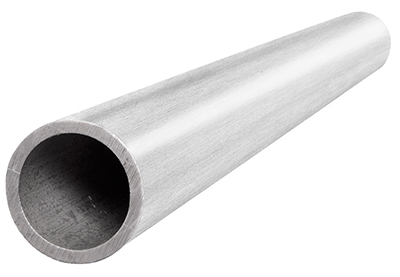
Seam-welded ASTM A312 TP304 pipe carries RO water, brewing wort and pharmaceutical WFI. Low carbon (<0.08 %) prevents intergranular corrosion during orbital welding—no post-weld anneal required.
Architectural Façades & Railings
Mirror-polished 4 mm panels clad Dubai metro stations, reflecting sunlight while resisting desert dust abrasion. 304 Stainless Steel survives 30-year urban exposure with <0.1 mm metal loss.
Chemical & Pharmaceutical Vessels
Pharma reactor shells handle pH 2–11 media at 80 °C; 304’s stable austenite prevents stress-corrosion cracking during steam sterilization cycles.
Automotive Trim & Exhaust
Exhaust manifold covers and decorative trim resist 650 °C flue gas and road salt; 304’s higher nickel content avoids rust streaks common with 201.
Medical Instruments & Implants
Surgical scissors, bone drills and MRI-compatible trolleys benefit from 304’s non-magnetic stability and passivation-friendly surface.
Comparison with Other Grades – 304 vs 201, 316, 430
| Grade | Cr % | Ni % | Corrosion | Relative Cost | Typical Applications |
|---|---|---|---|---|---|
| 201 | 16–18 | 3.5–5.5 | Medium | Low | Table legs, hose clamps |
| 304 | 18–20 | 8–10.5 | High | Medium | Food tanks, architecture |
| 316 | 16–18 + Mo | 10 | Very High | High | Marine, chemical |
| 430 | 16–18 | 0 | Medium-Low | Lowest | Dishwasher panels, trim |
Pros: 304 Stainless Steel offers the best balance of corrosion resistance, formability and cost for 80 % of stainless applications.
Cons: Within 500 m of coastlines or in chloride >1 000 ppm, upgrade to 316L; for absolute lowest budget indoor trim, 430 suffices.
Manufacturing Process & Quality Assurance
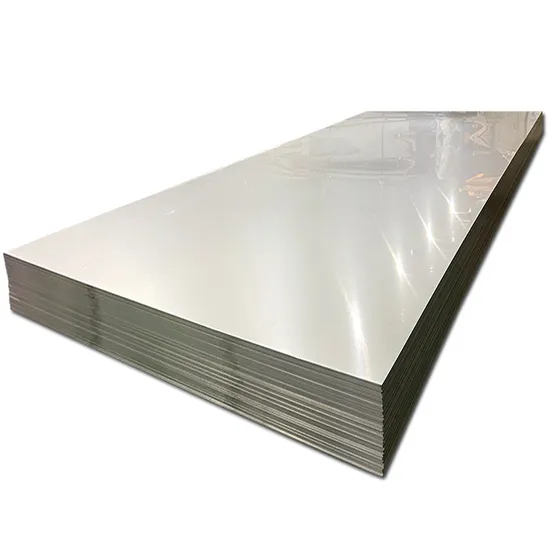
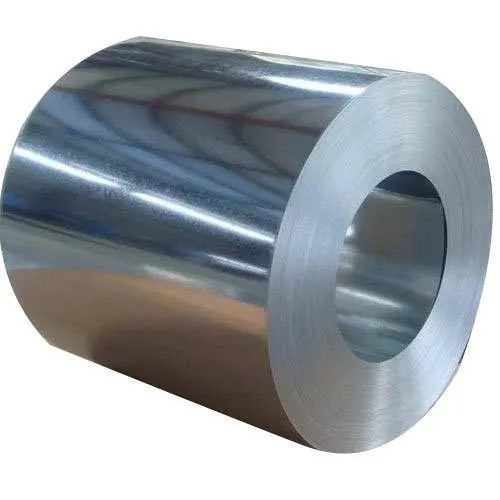
We melt 304 Stainless Steel in an electric-arc furnace, refine with AOD to reduce carbon below 0.03 % for 304L, then continuous-cast into slabs or billets. Hot rolling to strip or plate is followed by annealing at 1 010 °C and pickling in HNO₃/HF to remove oxide. Finishes include 2B for general use, BA for mirror-like reflectivity, No. 4 satin, HL hair-line and #8 super-mirror. Every coil is tested to ASTM A240, ISO 9001 and EN 10204 3.1, including ICP chemistry, ASTM A262 Practice E intergranular corrosion, and mechanical MTR. Third-party audits ensure full traceability from melt to dispatch.
Maintenance & Care Tips
Routine cleaning with warm water and a neutral detergent keeps 304 Stainless Steel bright; avoid steel wool or chloride bleach. For stubborn stains, use 1 % citric acid or a dedicated stainless polish, then rinse and wipe dry. Periodic passivation (2 % nitric or citric) restores the passive film in aggressive environments. Store sheets vertically on plastic-separated racks to prevent carbon-steel contamination.
Frequently Asked Questions
Q: Is 304 Stainless Steel food-safe?
A: Yes—its 18 % Cr meets FDA 21 CFR and EU 1935/2004 for neutral-pH food contact; for high-chloride sauces specify 316L.
Q: Difference from 316 in corrosion resistance?
A: 316 adds 2 % Mo, doubling chloride pitting resistance; in urban or indoor service, 304 performs identically at lower cost.
Q: Can I use 304 outdoors near the ocean?
A: Up to 500 m from shore is acceptable if regularly washed; closer proximity or splash zones require 316L or duplex.
Ready to specify the world's most trusted stainless grade? Contact us today for mill-direct coil, sheet, plate, bar or tube in 304 Stainless Steel—global delivery, custom sizes, full certification and competitive pricing included.