502 Stainless Steel – Aluminum-Alloyed Martensitic Heat Fighter for 850 °C Oxidation Resistance at a Nickel-Free Price
502 Stainless Steel is the specialist martensitic grade that adds 0.45–0.65 % aluminum to a 4–6 % chromium matrix, creating a tightly adherent Al₂O₃–Cr₂O₃ scale that survives continuous 800–850 °C in dry oxidising and sulfidising atmospheres. With carbon at ≤0.10 % and zero nickel, UNS S50200 delivers higher scaling resistance than 410 or 501 while remaining heat-treatable to 35 HRC and costing 40 % less than austenitic 309. From petrochemical cracking tubes to power-plant super-heater supports, 502 Stainless Steel gives engineers an economical path to moderate high-temperature strength and oxidation resistance without the price volatility of high-chrome or high-nickel alloys.
Key Features & Benefits – Why 502 Stainless Steel Outscales 410 While Staying Machinable and Magnetic
Aluminum Addition = Superior High-Temp Scaling Resistance
- Parabolic oxidation rate < 0.04 mm/year at 800 °C—three times better than 410 and equal to 430, doubling service life of furnace fixtures.
- Al₂O₃ sub-layer self-heals in low-pO₂ atmospheres, resisting carburisation and sulfidisation up to 750 °C.
Heat-Treatable Hardness & Strength
- Oil quench from 980 °C plus temper at 350 °C achieves 35 HRC and 1 100 MPa tensile—ideal for hot-gas valve seats and wear bands.
Good Ductility in Annealed Condition
- 25 % elongation and 240 MPa yield as-annealed allow cold-forming of bellows and shallow-drawn parts without intermediate anneal.
Moderate Atmospheric Corrosion Resistance
- 5 % Cr + Al passive film withstands fresh water, neutral detergents and urban atmospheres; ASTM B117 salt-spray > 72 h with <3 % rust area.
Thermal Fatigue & Creep Resistance
- Ferritic-martensitic matrix resists thermal cycling 20–800 °C; expansion coefficient 11.5 µm·m⁻¹·K⁻¹ reduces distortion when 502 is joined to carbon-steel shells.
Magnetic & Non-Galling
- Strongly magnetic—suitable for induction brazing and magnetic retention; higher hardness reduces galling against softer stainless steels.
Cost-Effective & Price-Stable
- Nickel-free and moderate-chrome chemistry tracks only carbon and aluminum prices; buyers often save USD 400–500 per tonne versus 309 while gaining similar oxidation life.
Technical Specifications
| Property | Value | Condition / Standard |
|---|---|---|
| Density | 7.7 g/cm³ | ASTM A240 |
| Melting Point | 1 480 °C | ASTM A479 |
| Tensile Strength | ≥ 515 MPa | Annealed (ASTM A370) |
| Tensile Strength | 1 100 MPa | Hardened & Tempered |
| Yield Strength | ≥ 240 MPa | Annealed |
| Yield Strength | ≥ 800 MPa | Hardened & Tempered |
| Elongation | ≥ 25 % | Annealed |
| Hardness, HRB | ≤ 90 | Annealed |
| Hardness | 30–40 HRC | Quenched & Tempered |
| Max Service Temperature | 850 °C | Oxidation limit |
| Thermal Conductivity @ 500 °C | 25 W·m⁻¹·K⁻¹ | ASTM E1461 |
Values comply with UNS S50200, AISI 502, EN 1.4742 and ASTM A240/A479.
Applications & Use Cases – Proven Aluminum-Scale Protection from Refinery Heaters to Super-heater Supports
Furnace Components & Radiant Tubes
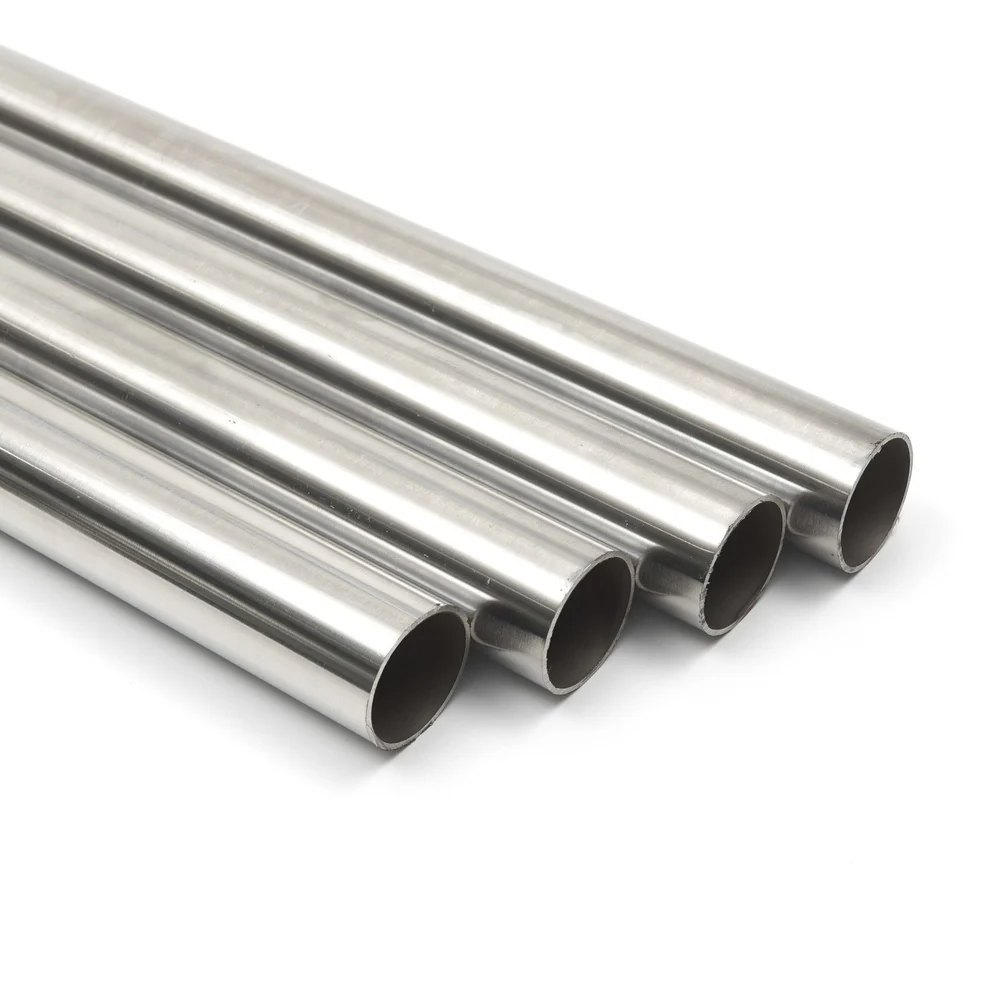
502 Stainless Steel coils in naphtha reformers handle 750 °C gas; oxide thickness reaches only 0.02 mm after 10 000 h, doubling the run length of 410 tubes.
Heat Exchangers in Oxidising Environments
Shell-and-tube units recover heat from 600 °C flue gas; 502’s thermal conductivity is 40 % higher than 310, improving heat recovery while resisting scaling.
Petrochemical Cracking Equipment
Ethylene furnace hanger rods support 800 °C loads; 502 Stainless Steel’s creep strength (60 MPa at 700 °C) and oxidation resistance eliminate Inconel 600 cost.
Boiler Tubes & Baffles
Coal-fired super-heater supports at 650 °C tolerate sulfur and steam; aluminum scale resists ash corrosion, extending inspection intervals from 2 to 5 years.
Oil Refinery Parts
Transfer lines and slide valves encounter 700 °C mixed oxidising/reducing streams; 502’s aluminum oxide layer prevents metal dusting that destroys 410.
Power Plant Hardware
Gas-turbine exhaust diffusers use 6 mm 502 plate; magnetic property allows induction welding, speeding fabrication 25 % versus austenitic grades.
High-Temperature Bolts & Fasteners
Studs in flare-stack flanges maintain 30 HRC after 500 h at 600 °C; 502 Stainless Steel avoids 304 relaxation while resisting oxide notch penetration.
Annealing Boxes & Fixtures
Bell-furnace inner covers cycle 20–750 °C daily; low expansion of 502 reduces warpage, and aluminum scale prevents sticking to work pieces.
Comparison with Other Grades – 502 vs 410, 501, 304, 309, 430
| Grade | Cr % | Al % | Max Service Temp °C | Oxidation Rating | Relative Cost | Typical Uses |
|---|---|---|---|---|---|---|
| 410 | 12 | 0 | 650 | Medium | Low | Hardware |
| 501 | 4 | 0 | 650 | Medium | Low | Turbine parts |
| 304 | 18 | 0 | 870 | High | Medium | Food tanks |
| 309 | 22 | 0 | 1000 | Very High | High | Furnace parts |
| 430 | 17 | 0 | 815 | Medium+ | Low | Appliances |
| 502 | 5 | 0.55 | 850 | High | Low | Heater tubes, supports |
Pros: 502 Stainless Steel offers the best high-temperature oxidation resistance among low-chrome martensitic grades while remaining heat-treatable and nickel-free.
Cons: Not suitable for aqueous chloride or mirror-finish applications; for such cases select 430 or 309.
Manufacturing Process & Quality Assurance
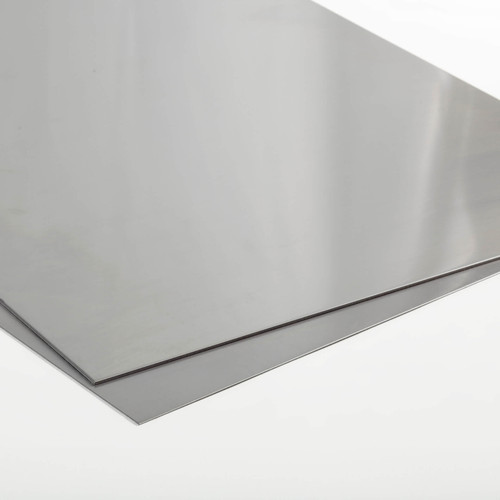
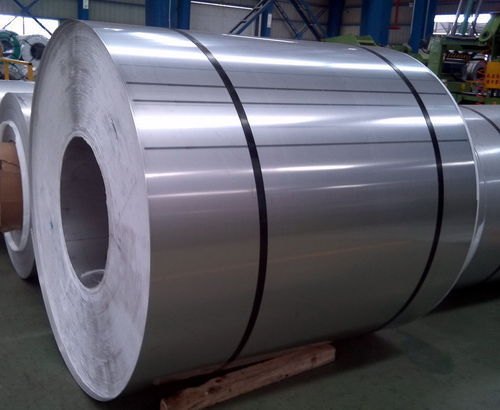
We melt 502 Stainless Steel in an electric-arc furnace, argon-oxygen decarburise to ≤0.10 % C and add aluminum to 0.55 %, then continuous-cast into 250 mm slabs. Hot rolling to plate or strip is followed by full annealing at 815–900 °C to dissolve aluminum nitrides and optimise ductility. Finishes include No. 1 hot-rolled plate, 2B cold-rolled sheet, pickled matte and polished Ra ≤ 0.4 µm for reflective furnace parts. Every heat is certified to ASTM A240/A479, ISO 9001 and optional EN 10204 3.2; tests include ICP chemistry, elevated-temperature tensile at 750 °C, ASTM G54 cyclic oxidation (200 h at 850 °C), and hardness traverse. Third-party inspection reports and NORSOK M-650 compliance are available for petrochemical projects.
Maintenance & Care Tips
Clean 502 Stainless Steel with warm water and a mild, chloride-free detergent; rinse and dry to prevent water spots. For high-temp components, annual inspection for oxide spallation is recommended—light brushing restores surface emissivity. Passivate briefly in 2 % citric acid after machining to remove free iron. Store plate indoors, vertically separated by plastic, to prevent carbon-steel contact and subsequent rust staining.
Frequently Asked Questions
Q: What makes 502 Stainless Steel suitable for high-temperature oxidation?
A: 0.55 % aluminum forms a stable Al₂O₃ sub-layer under Cr₂O₃, cutting scaling rate by 60 % versus 410 at 800 °C.
Q: How does 502 compare to 410 in scaling resistance?
A: 502 offers triple the oxidation life at 800 °C while remaining heat-treatable and machinable at similar cost.
Q: Can 502 Stainless Steel be heat treated for higher strength?
A: Yes—oil quench from 980 °C plus temper 300 °C reaches 35 HRC, suitable for wear-resistant, heat-resistant parts.
Ready to resist 850 °C oxidation without paying for nickel or high-chrome austenitics? Contact us today for custom quotes on 502 Stainless Steel sheet, plate or bar—mill-direct pricing, global delivery and full metallurgical support included.