321 Stainless Steel – Titanium-Stabilised Austenitic Heat-Resistor for Welded High-Temperature Power
321 Stainless Steel is the titanium-stabilised evolution of the classic 18-8 alloy, engineered to resist sensitisation and intergranular corrosion after prolonged exposure to temperatures between 425 °C and 815 °C. Containing 17–19 % chromium, 9–12 % nickel and titanium at a minimum of five times the carbon content, UNS S32100 forms ultra-stable carbides that lock up carbon and prevent chromium depletion along grain boundaries. The result is a non-magnetic, readily weldable austenitic grade that retains strength, ductility and oxidation resistance up to 870 °C without post-weld annealing. From aircraft exhaust manifolds to petrochemical furnace coils, 321 Stainless Steel delivers 304-level corrosion resistance with 304-matching cost, but with the high-temperature integrity that titanium stabilisation provides.
Key Features & Benefits – Why 321 Stainless Steel Outperforms 304 When the Heat Is On
Titanium Stabilisation = Zero Sensitisation
- Titanium combines with carbon to form harmless TiC, preventing chromium-carbide precipitation; welded joints pass ASTM A262 Practice E (Strauss test) without fissures.
- No post-weld anneal required—saves furnace time and distortion rework on large ducts or heavy-wall pipe spools.
Superior High-Temperature Creep & Stress-Rupture Strength
- 100 000 h rupture strength at 650 °C is 40 % higher than 304; allows thinner headers and lighter expansion joints in power plants.
- Oxidation scaling rate < 0.05 mm/year at 870 °C—half that of 304, doubling service life in refinery heaters.
Excellent Oxidation & Scaling Resistance
- Continuous operation to 870 °C and cyclic exposure to 900 °C with minimal spallation—preferred for automotive turbo-back exhausts and aircraft collector rings.
Cryogenic & Room-Temperature Toughness
- Charpy V-notch > 150 J at –196 °C—suitable for LNG bellows and cold-box piping transitions.
- 40 % elongation and 205 MPa minimum yield provide excellent formability for deep-drawn bellows convolutions.
Good Weldability & Fabrication Latitude
- Weldable by GTAW, GMAW, SMAW and resistance methods; 321 or 347 filler metals eliminate post-weld diffusion of carbon.
- Lower work-hardening exponent than 347—reduces tool wear during multi-stage brake-forming of furnace skirts.
Cost-Effective Upgrade Path
- Priced 5–8 % above 304 but 15–20 % below 316L, offering the most economical solution for welded elevated-temperature components.
Technical Specifications
| Property (Room Temp) | Typical Value | Standard |
|---|---|---|
| Density | 8.0 g/cm³ | ASTM A240 |
| Melting Range | 1 400 – 1 425 °C | AISI |
| Tensile Strength | ≥ 515 MPa | ASTM A370 |
| Yield Strength (0.2 %) | ≥ 205 MPa | ASTM A370 |
| Elongation in 50 mm | ≥ 40 % | ASTM A370 |
| Hardness, HRB | ≤ 92 | ASTM E18 |
| Modulus of Elasticity | 200 GPa | ASTM A666 |
Values satisfy AISI 321, UNS S32100, EN 1.4541 and ASTM A276/A479, ensuring global code compliance.
Applications & Use Cases – Proven Performance from Aerospace to Refinery Fireboxes
Aerospace Exhaust & Engine Components
321 Stainless Steel carries 900 °C gas streams in turbine collector rings and after-burner ducts. Rolls-Royce Trent 700 uses 1.2 mm sheet for bypass ducts, eliminating the need for heavier Inconel 625 and saving 45 kg per engine.
Automotive Turbo & Exhaust Systems
From race-car headers to heavy-duty truck stacks, 321 Stainless Steel survives thermal cycling from 100 °C to 850 °C without cracking. A European OEM extended warranty on turbo-downpipes from 5 to 10 years after switching from 304.
Petrochemical Furnace Tubes & Breechings
Radiant coils in naphtha crackers operate at 750 °C with steam; 321 Stainless Steel prevents sagging and carburisation better than 304, doubling campaign life. BASF reported a 60 % reduction in unplanned shutdowns after retrofit.
Expansion Joints & Bellows
Multi-ply bellows in power-plant hot-gas paths absorb 200 mm axial movement at 650 °C. Titanium stabilisation ensures welded convolutions resist polythionic-acid cracking during shutdowns.
Heat Exchangers & Super-Heater Tubes
Shell-and-tube units handle sour gas at 300 °C and 15 bar; 321 Stainless Steel tubes resist both sulfidation and chloride pitting, outperforming 316 which suffers molybdenum depletion.
Refinery Hardware – Flanges, Rings, Manifolds
Forged 321 bar stock meets ASTM A182 F321, providing high-temp strength for Class 600 valves. Hydroskimming units favour 321 for its immunity to sigma-phase embrittlement after 10 000 h at 700 °C.
Cryogenic Transfer Lines
LNG loading arms use 321 Stainless Steel bellows to bridge thermal movement; toughness at –165 °C prevents brittle fracture during emergency shut-downs.
Comparison with Other Grades – 321 vs 304, 316, 347, 310
| Grade | Stabiliser | High-Temp Oxidation | Intergranular Resistance | Relative Cost | Typical Uses |
|---|---|---|---|---|---|
| 304 | None | Good | Requires anneal | Medium | General food tanks |
| 316 | None | Good | Requires anneal | High | Marine chemical |
| 321 | Ti | Excellent | Yes (as-welded) | Medium+ | Exhaust, furnace |
| 347 | Nb | Excellent | Yes (as-welded) | High | Nuclear, refinery |
| 310 | None | Excellent | Requires anneal | Very High | 1000 °C radiant tubes |
Pros: 321 Stainless Steel offers the best balance of elevated-temperature strength, sensitisation resistance and cost for welded assemblies up to 870 °C.
Cons: For continuous > 950 °C service, upgrade to 310 or nickel alloys; where molybdenum is mandatory for chloride pitting, select 316.
Manufacturing Process & Quality Assurance
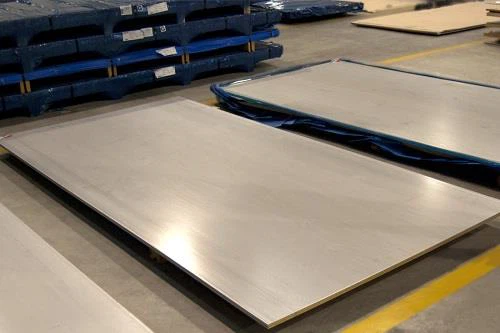
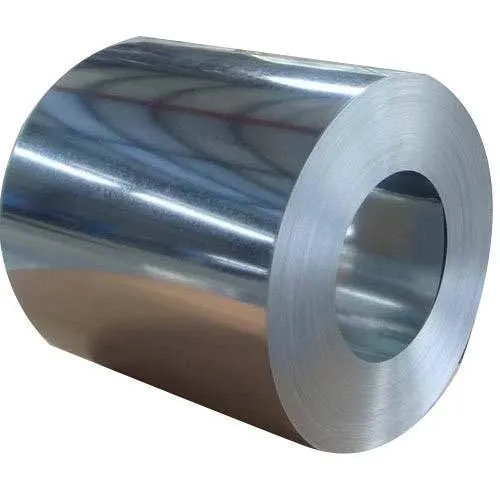
We melt 321 Stainless Steel in an electric-arc furnace, argon-oxygen decarburise to ≤ 0.03 % C, then add titanium wire to achieve 5× C minimum (typically 0.4 % Ti). Continuous casting into 250 mm blooms is followed by hot rolling to plate, strip or bar. Solution annealing at 980–1 100 °C with water quench dissolves TiC uniformly; rapid cooling prevents titanium nitrides from embrittling grain boundaries. Finishes include 2B for general fabrication, BA for mirror reflectivity, No. 1 for thick plate and polished Ra ≤ 0.4 µm for aerospace ducts. Every batch is certified to ASTM A240/A479, ISO 9001 and optional AS/EN 9100 for aerospace; tests include ICP chemistry, Strauss sensitisation (ASTM A262 Practice E), high-temp tensile at 650 °C and grain-size determination. Full MTR and third-party inspection reports accompany each shipment, allowing direct upload into PPAP or NORSOK compliance files.
Maintenance & Care Tips
Clean 321 Stainless Steel with warm water and a neutral pH detergent; avoid chloride-based cleaners. For welded areas exposed above 600 °C, annual inspection for oxide spallation is recommended—light brushing and fresh-water rinse restore the surface. Perform citric-acid passivation (2 % wt., 30 min, 60 °C) after any mechanical grinding to remove free iron. Store plate and bar under cover, vertically separated by plastic to prevent carbon-steel contamination that could initiate localised rust.
Frequently Asked Questions
Q: Why use 321 instead of 304 for welding?
A: Titanium in 321 Stainless Steel traps carbon, preventing chromium-carbide precipitation in heat-affected zones—no post-weld anneal needed, saving time and distortion.
Q: What is the maximum service temperature for 321 Stainless Steel?
A: 870 °C for continuous oxidation resistance; short excursions to 900 °C are acceptable if cyclic thermal shock is limited.
Q: Is 321 magnetic?
A: Annealed condition is non-magnetic (permeability < 1.02); light cold work may raise values slightly but still suits non-ferrous sensor housings.
Ready to eliminate post-weld anneal costs and extend high-temperature life? Contact us today for custom quotes on 321 Stainless Steel sheet, plate, bar or welded pipe—mill-direct pricing, global delivery and full metallurgical support included.