409 Stainless Steel – Titanium-Stabilised Ferritic Exhaust Champion for 815 °C Performance at Automotive Cost
409 Stainless Steel is the titanium-stabilised ferritic grade purpose-built for the punishing thermal cycles, acid condensates and vibration found in modern exhaust systems. With 10.5–11.75 % chromium, ≤0.08 % carbon and titanium ≥6× carbon content, UNS S40900 forms a stable, self-healing oxide that survives continuous 815 °C while remaining readily deep-drawn, magnetically attractive and weldable without post-weld anneal. Compared with aluminised carbon steel, 409 Stainless Steel doubles muffler life; against 304 it cuts material cost 30 % while matching exhaust-stream corrosion; and versus 430 it offers superior weld ductility after high-heat cycling. From catalytic-converter shells to agricultural dryer ducts, 409 Stainless Steel delivers the thermal-fatigue resistance that keeps hot sections running longer and lighter.
Key Features & Benefits – Why 409 Stainless Steel Thrives in Hot Gas, Condensate & Cyclic Heat
Titanium Stabilisation = Zero Sensitisation
- TiC formation locks up carbon, preventing chromium depletion along weld HAZ; as-welded joints pass ASTM A262 Practice E without fissures.
- No post-weld anneal required—saves furnace energy and distortion rework on large exhaust manifolds.
Good High-Temperature Oxidation Resistance
- Parabolic scaling rate < 0.05 mm/year at 800 °C—four times better than aluminised steel and half of 430, extending muffler life to 10 years/240 000 km.
Excellent Exhaust-Gas & Condensate Corrosion Resistance
- 11 % Cr passive film resists sulfuric and nitric acids formed when exhaust cools below 150 °C; ASTM G85 acetic-acid-salt-spray > 500 h with <2 % red rust.
Superior Formability & Deep Drawability
- Low work-hardening exponent (n ≈ 0.18) allows 55 % deep-draw ratios in converter shells, eliminating intermediate anneals during multi-stage pressing.
Low Thermal Expansion & Higher Conductivity
- Coefficient 11.5 µm·m⁻¹·K⁻¹ (20–800 °C) reduces thermal fatigue when 409 expands against 1020 steel flanges; conductivity 24 W·m⁻¹·K⁻¹ speeds catalyst light-off.
Magnetic & Non-Galling
- Ferromagnetic structure suits induction welding and magnetic clamping; no nickel means no austenite → martensite shift during thermal cycling.
Cost-Effective & Price-Stable
- Nickel-free chemistry tracks only chrome price; buyers typically save USD 300–400 per tonne versus 304 while meeting 90 % of exhaust corrosion requirements.
Technical Specifications
| Property | Value | Standard |
|---|---|---|
| Density | 7.7 g/cm³ | ASTM A240 |
| Melting Point | 1 470 °C | ASTM A268 |
| Tensile Strength | ≥ 380 MPa | ASTM A370 |
| Yield Strength | ≥ 205 MPa | ASTM A370 |
| Elongation | ≥ 22 % | ASTM A370 |
| Hardness, HRB | ≤ 85 | ASTM E18 |
| Max Continuous Temp | 815 °C | ASTM G54 |
| Thermal Conductivity @ 500 °C | 24 W·m⁻¹·K⁻¹ | ASTM E1461 |
| Coeff. Thermal Expansion 20–800 °C | 11.5 µm·m⁻¹·K⁻¹ | ASTM E831 |
Values comply with UNS S40900, AISI 409, EN 1.4512 and ASTM A240/A268.
Applications & Use Cases – Proven Durability from Tailpipe to Thermal-Process Ducting
Automotive Exhaust Systems
From 1.0 L turbo passenger cars to 15 L diesel trucks, 409 Stainless Steel forms muffler shells, resonators and down-pipes. A Tier-1 supplier extended warranty from 5 to 10 years/240 000 km after switching from aluminised steel, saving USD 4 million in claims.
Catalytic Converter & DPF Housings
Deep-drawn 1.2 mm 409 cones withstand 850 °C regeneration cycles; titanium stabilisation prevents weld decay, maintaining emission compliance to Euro 6.
Agricultural Dryers & Oven Ducts
Grain dryers cycle 20–700 °C daily; 409 Stainless Steel radiant tubes show 0.03 mm oxide after 8 000 h versus 0.15 mm for 430.
Chimney Liners & Domestic Heaters
Flexible 0.6 mm 409 liner resists 600 °C flue gas and condensate; magnetic property allows induction-sealing joints, eliminating high-temp silicone.
Heat Exchangers & Recuperators
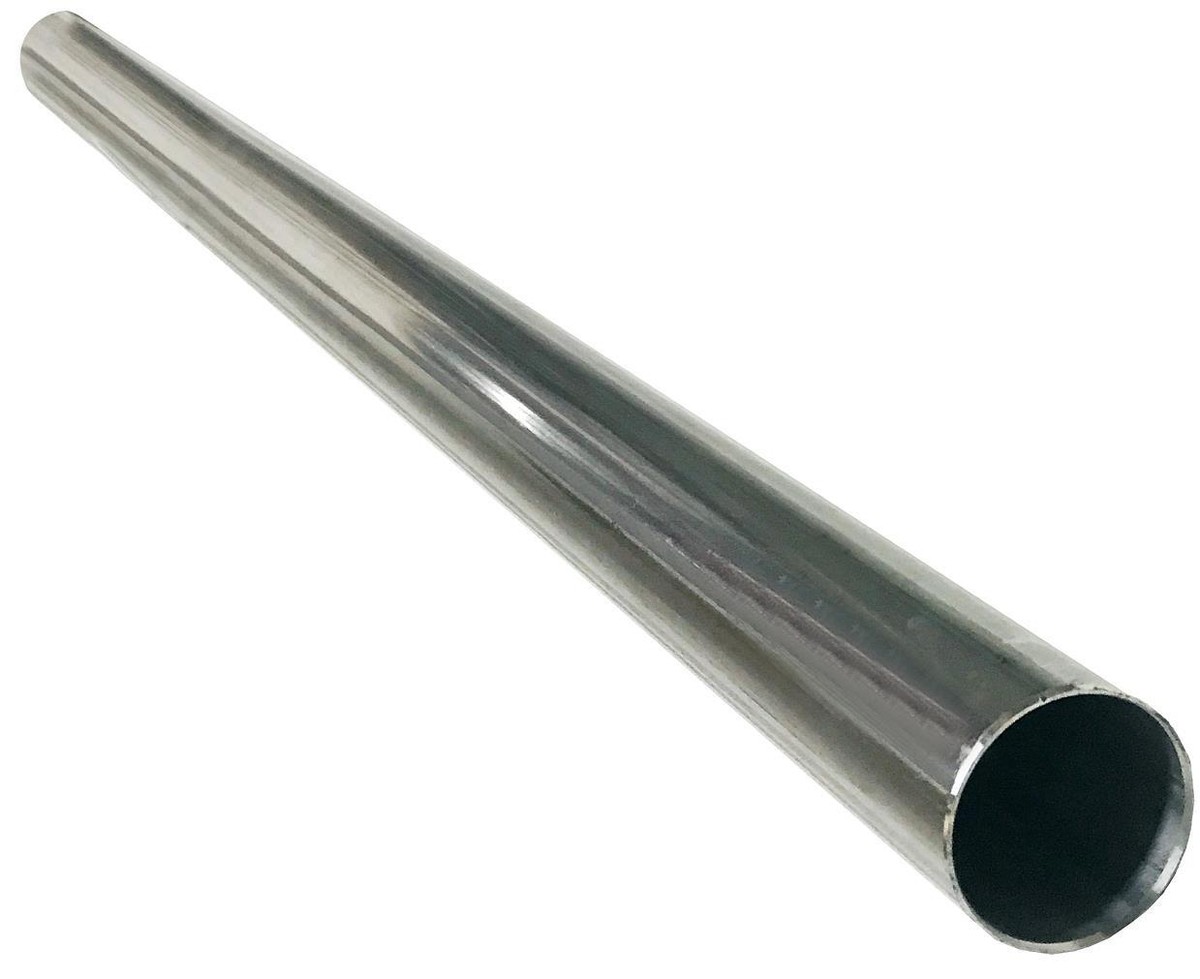
Ferritic tubes handle 700 °C exhaust-to-air heat recovery; higher conductivity boosts effectiveness 12 % versus 310 while cutting weight 20 %.
Power Plant Boiler Shrouds
Gas-turbine HRSG baffles at 650 °C tolerate sulfur in fuel gas; 409’s sulfidation resistance equals 309 at half the material cost.
Structural Components in Moderate Heat
Furnace door frames and access panels use 409 angle iron; weldability allows field repairs without post-weld heat treatment.
Comparison with Other Grades – 409 vs 304, 430, 439, 441, Aluminised Carbon Steel
| Grade | Cr % | Stabiliser | Max Cont. Temp °C | Weldability | Relative Cost | Typical Uses |
|---|---|---|---|---|---|---|
| 304 | 18 | None | 870 | Excellent | High | Food tanks |
| 430 | 17 | None | 815 | Good | Medium | Appliances |
| 439 | 17 | Ti | 850 | Excellent | Medium+ | Auto exhaust |
| 441 | 18 | Nb+Ti | 900 | Excellent | Medium+ | Manifolds |
| Aluminised | 0 | Al | 550 | Good | Very Low | Old mufflers |
| 409 | 11 | Ti | 815 | Excellent | Low | Exhaust systems |
Pros: 409 Stainless Steel offers the lowest cost stainless solution for 815 °C exhaust service while eliminating post-weld anneal and post-weld sensitisation.
Cons: Not suitable for marine immersion or aesthetic mirror finishes; for such cases select 439 or 441.
Manufacturing Process & Quality Assurance
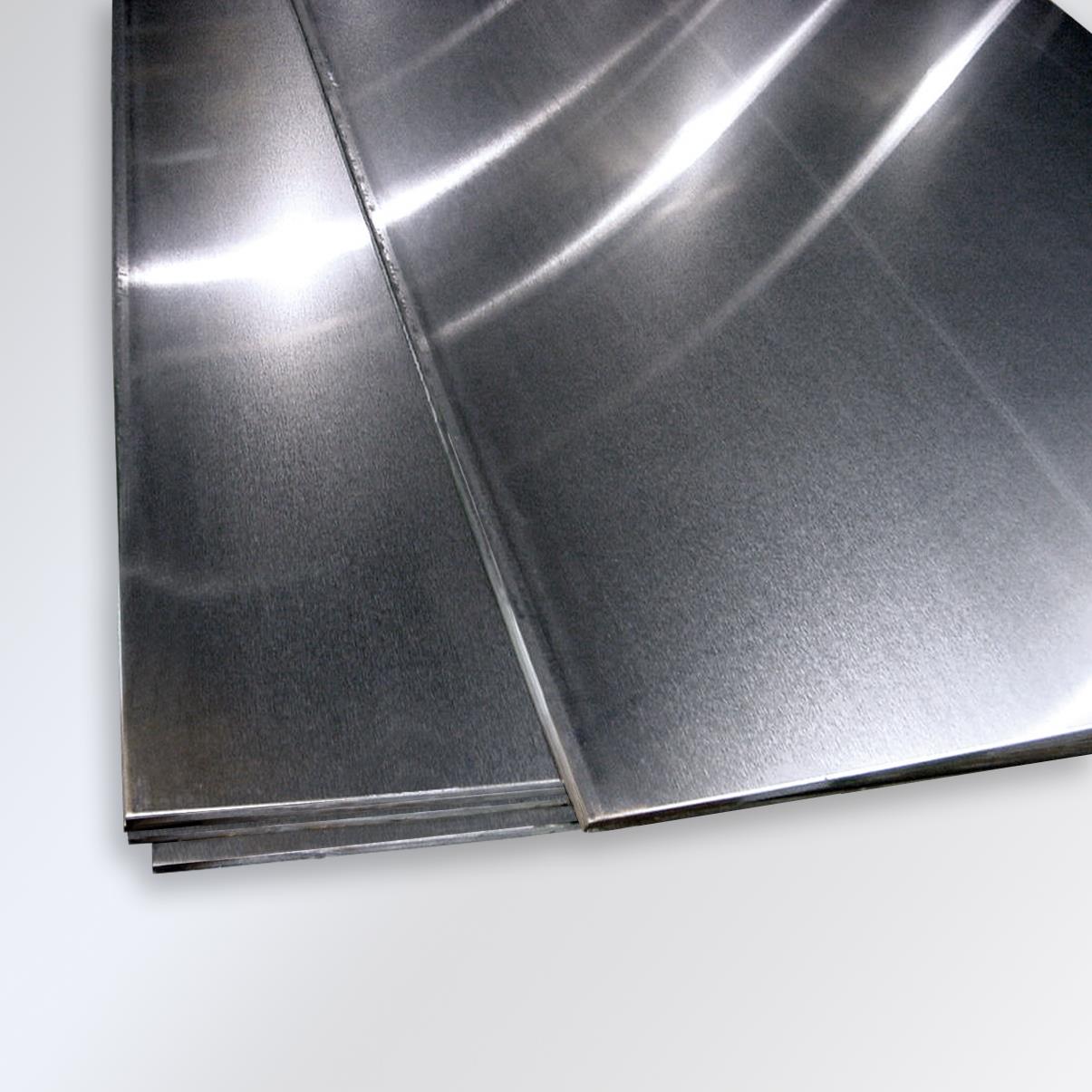
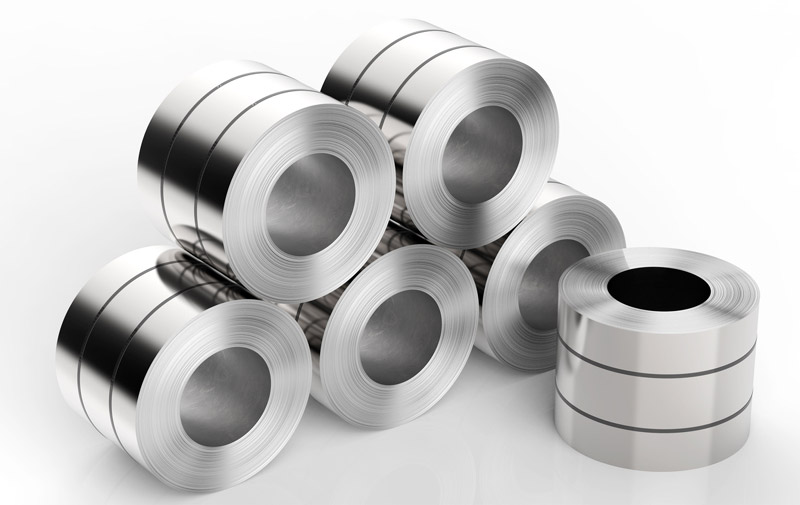
We melt 409 Stainless Steel in an electric-arc furnace, argon-oxygen decarburise to ≤0.03 % C, then add titanium wire to achieve 6× C minimum (typically 0.2 % Ti). Continuous casting into 200 mm slabs is followed by hot rolling to 3 mm coil and cold rolling to final gauge. Continuous annealing at 800–900 °C in 100 % hydrogen produces a clean, oxide-free surface with optimum ductility. Finishes include 2D for general exhaust pipe, 2B for decorative trim, BA bright anneal and No. 4 satin. Every coil is certified to ASTM A240/A268, ISO 9001 and EN 10204 3.1; tests include ICP chemistry, elevated-temperature tensile at 700 °C, ASTM G85 cyclic corrosion in synthetic condensate, and magnetic permeability (< 1.3). Third-party inspection certificates and REACH/RoHS compliance statements are available for automotive OEMs.
Maintenance & Care Tips
Clean 409 Stainless Steel with warm water and a mild, chloride-free detergent; rinse and dry to prevent water spots. For exhaust components, annual inspection for oxide spallation is recommended—light brushing and compressed-air blowing restore emissivity. Avoid hydrochloric or ferric-chloride cleaners that can initiate pitting. Store coil indoors, vertically separated by plastic, to prevent carbon-steel contact and subsequent rust staining.
Frequently Asked Questions
Q: Why is 409 Stainless Steel preferred for exhaust systems?
A: Titanium stabilisation prevents sensitisation, while 11 % Cr resists 815 °C oxidation and acid condensate—delivering 10-year life at 30 % lower cost than 304.
Q: How does 409 compare to 304 in cost and high-temperature performance?
A: 409 costs ~30 % less and matches exhaust-stream oxidation up to 815 °C, but only half the aqueous corrosion resistance—choose 409 for exhaust, 304 for wet service.
Q: Can 409 Stainless Steel be welded easily?
A: Yes—use 409, 309L or 308L filler, minimise heat input, and no post-weld anneal is required, making it ideal for high-speed exhaust-line fabrication.
Ready to cut cost, weight and warranty claims in hot-gas systems? Contact us today for custom quotes on 409 Stainless Steel coil, tube or precision blanks—mill-direct pricing, global delivery and full metallurgical support included.