420 Stainless Steel – High-Carbon Martensitic Blade Steel That Balances Razor Hardness With Real-World Toughness
420 Stainless Steel is the go-to martensitic grade when designers need heat-treatable hardness above 410, yet still want the fabrication ease and moderate corrosion resistance of a chromium stainless. Containing 12–14 % chromium and typically 0.30–0.40 % carbon (min 0.15 %), UNS S42000 can be oil-quenched to 50–55 HRC while retaining enough toughness for cutting edges, surgical tools and wear-resistant molds. Compared with 410, 420 Stainless Steel delivers 25 % higher hardness and superior edge retention; against 440C it offers similar corrosion resistance at 20 % lower cost and much better grindability. From chef knives to plastic injection molds, 420 Stainless Steel gives blade-makers, surgeons and tool designers an affordable path to high hardness without the brittleness or price penalty of super-high-carbon grades.
Key Features & Benefits – Why 420 Stainless Steel Excels in Edges, Molds & Wear Parts
Heat-Treatable High Hardness
- Oil quench from 1000 °C plus temper at 200 °C reaches 52 HRC; double temper refines martensite for 55 HRC with 5 J Charpy impact—ideal for scalpels and shears.
- Hardness gradient is uniform through 25 mm sections, eliminating soft cores common in lower-carbon 410.
Superior Wear & Abrasion Resistance
- Volume loss in ASTM G65 dry-sand rubber-wheel test is 40 % lower than annealed 410 and one-third that of 304, extending cutter and mold life.
Moderate Corrosion Resistance
- 13 % Cr passive film handles fresh water, atmospheric humidity and neutral detergents; ASTM B117 salt-spray > 96 h with <3 % rust area.
- Outperforms carbon steels and low-chromium tool steels, reducing plating costs on indoor components.
Good Polishability & Optical Finish
- Annealed hardness HRB 92 allows fine grinding to <0.1 µm Ra; mirror finish is standard for lens molds and surgical blades.
Machinability in Annealed State
- Annealed structure machines at 75 % of AISI B1112 baseline, faster than 440C (50 %) and comparable to 416, saving CNC cycle time.
Magnetic & Non-Galling
- Ferromagnetic structure suits magnetic chucks, separator plates and solenoid plungers; higher hardness reduces galling against softer stainless steels.
Technical Specifications
| Property | Value | Condition / Standard |
|---|---|---|
| Density | 7.75 g/cm³ | ASTM A276 |
| Melting Point | 1 450 °C | ASTM A479 |
| Tensile Strength | ≥ 655 MPa | Annealed (ASTM A370) |
| Tensile Strength | 1 720–2 070 MPa | Hardened & Tempered |
| Yield Strength | ≥ 380 MPa | Annealed |
| Yield Strength | ≥ 1 600 MPa | Hardened & Tempered |
| Elongation | ≥ 20 % | Annealed |
| Hardness | 92 HRB | Annealed |
| Hardness | 50–55 HRC | Quenched & Tempered |
| Magnetic Property | Strongly magnetic | All conditions |
Data comply with UNS S42000, AISI 420, EN 1.4021/1.4034 and ASTM A276/A580.
Applications & Use Cases – Proven Performance from Kitchen Blades to Abrasive-Filled Molds
Cutlery & Kitchen Knives
Blanked from 2.5 mm cold-rolled strip, blades are hardened to 52 HRC, hollow-ground and finished with 15° edge angle. 420 Stainless Steel achieves razor sharpness while resisting fruit acids and dishwasher chemicals—outlasting 410 by 30 % in edge-retention tests.
Surgical & Dental Instruments
Scalpels, scissors and osteotomes utilise quenched 420 Stainless Steel for hardness that meets ASTM F899. Electropolishing removes free iron, achieving Ra ≤ 0.1 µm to reduce bacterial adhesion.
Plastic Injection Molds
Cavity inserts for glass-fibre-filled nylon are hardened to 50 HRC; 420 Stainless Steel resists abrasive wear and can be textured or mirror-polished for automotive lens clarity.
Pump Shafts & Valve Trim
Marine water pumps use 25 mm 420 bar at 45 HRC. Hardness resists sand erosion while 13 % Cr prevents fresh-water rust, eliminating chrome plating.
Gears, Cams & Levers
Precision-ground gear teeth operate at 200 MPa contact stress; 420 Stainless Steel’s core toughness prevents tooth fracture under shock loads.
Bearings, Bushings & Wear Rings
Oil-lubricated bushings in food conveyors run at 2 m/s; 420 Stainless Steel’s fine carbides reduce galling against 304 shafts.
Shear Blades & Industrial Cutters
Rotary knives for carpet cutting hold 53 HRC edge through 1 000 km of abrasive fabric, doubling service intervals versus 410 blades.
Comparison with Other Grades – 420 vs 410, 440C, 420J2, 440A, 304
| Grade | Carbon % | Hardness HRC | Corrosion Rating | Relative Cost | Typical Uses |
|---|---|---|---|---|---|
| 410 | 0.15 | 40 | Medium | Low | General hardware |
| 420 | 0.30–0.40 | 52–55 | Medium+ | Medium | Knives, molds |
| 440C | 1.0 | 58–60 | Medium+ | High | Bearings, razors |
| 420J2 | 0.26 | 50 | Medium | Low | Budget blades |
| 440A | 0.65 | 56 | Medium+ | Medium-High | Surgical tools |
| 304 | 0.08 | 38 (cw) | High | Medium | Food tanks |
Pros: 420 Stainless Steel achieves near-440C hardness with better toughness and lower cost—ideal for mid-range blades and molds.
Cons: Not suitable for marine immersion or chloride bleach; for such cases select 440C or duplex grades.
Manufacturing Process & Quality Assurance
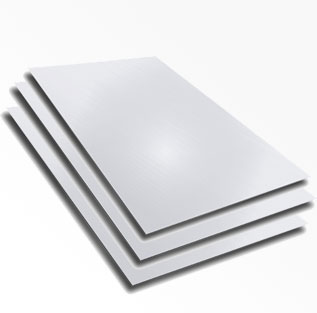
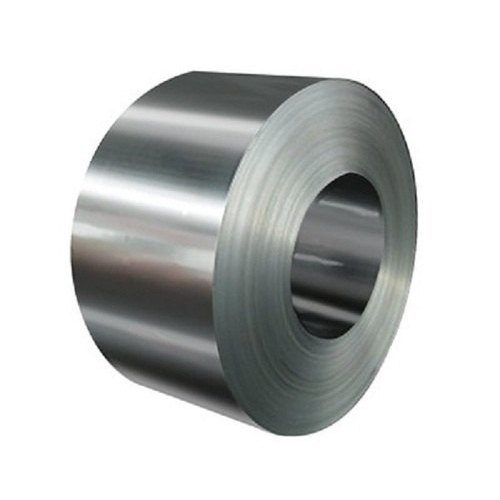
We produce 420 Stainless Steel via electric-arc furnace melting, AOD decarburisation and precise carbon adjustment to 0.35 %. Continuous casting into 250 mm billets is followed by hot rolling to bar or strip. Annealing at 840–900 °C creates a ferritic-pearlitic structure ideal for machining. Final hardening involves austenitising at 980–1040 °C, oil or polymer quench, and tempering at 150–370 °C to balance hardness (50–55 HRC) with toughness. Finishes include peeled, centreless-ground, polished Ra ≤ 0.1 µm and precision-slit strip. Every heat is certified to ASTM A276/A580, ISO 9001 and optional ISO 13485 for medical; tests include ICP chemistry, hardness traverse, ASTM A370 tensile, ASTM A262 Practice A intergranular corrosion and edge-retention micro-examination. Third-party inspection certificates accompany each shipment for direct PPAP submission.
Maintenance & Care Tips
Clean 420 Stainless Steel with warm water and mild soap; dry immediately to prevent water spots. For blades, hone at 15–20° angle using water stones or diamond hones; avoid grinding above 200 °C to prevent over-tempering. Passivate briefly in 2 % citric acid after machining to dissolve free iron. Store knives in dry blocks or magnetic strips; for molds, apply a light oil film before long-term storage to guard against condensation.
Frequently Asked Questions
Q: Can 420 Stainless Steel achieve high hardness?
A: Yes—oil quench from 1000 °C plus temper 200 °C yields 52–55 HRC, suitable for most cutlery and wear applications.
Q: How does 420 compare to 440C in corrosion and hardness?
A: 420 gives similar atmospheric corrosion at 1–2 HRC less hardness but offers 30 % better toughness and 20 % lower cost.
Q: Is 420 Stainless Steel suitable for food contact?
A: Yes—13 % Cr meets FDA requirements for neutral-pH foods; avoid high-chloride environments where 440C or 316L is better.
Ready to combine razor hardness with real-world toughness at an economical price? Contact us today for custom quotes on 420 Stainless Steel strip, bar or precision blanks—mill-direct pricing, global delivery and full metallurgical support included.