630 Stainless Steel – 17-4PH Precipitation-Hardening Powerhouse Delivering 1310 MPa Strength with 304-Class Corrosion
630 Stainless Steel—globally known as 17-4PH or UNS S17400—is the benchmark martensitic precipitation-hardening (PH) alloy that adds 3–5 % Cu and 0.15–0.45 % Nb to a 15–17.5 % Cr, 3–5 % Ni matrix. After a simple one-step age at 480–620 °C, 630 Stainless Steel achieves tensile strengths up to 1310 MPa—roughly triple that of annealed 304—while retaining corrosion resistance comparable to 304L and toughness that exceeds 420 at twice the hardness. The grade stays magnetic in all heat-treat conditions, experiences near-zero distortion during aging, and machines readily in the solution-annealed state. From landing-gear forgings to sub-sea valve stems, 630 Stainless Steel gives designers the only standard stainless alloy that truly combines high strength, high hardness, good corrosion resistance and reliable weldability in one cost-effective package.
Key Features & Benefits – Why 630 Stainless Steel (17-4PH) Outperforms Both Martensitic and Austenitic Grades
Precipitation Hardening = Customisable Strength Levels
- One-step age (H900 @ 480 °C) yields 1310 MPa tensile / 1170 MPa yield / 40 HRC—ideal for bearings and tooling.
- Over-aging (H1150 @ 620 °C) still delivers 930 MPa tensile with 18 % elongation and superior stress-corrosion resistance for pressure vessels.
Excellent Corrosion Resistance in Marine & Chemical Media
- PREN ≈ 17 meets ASTM G48 pitting test at 25 °C; outperforms 410/420 and equals 304 in neutral chloride environments.
- Passes 500 h ASTM B117 neutral-salt-spray with <2 % red rust—suitable for offshore splash zones without additional coating.
Good Fatigue Strength & Toughness
- Rotating-beam fatigue limit 480 MPa (H900)—double that of 420 at similar hardness; Charpy V-notch ≥ 20 J at room temperature after H1150.
Low Distortion During Heat Treatment
- Aging at 480–620 °C causes < 0.05 % dimensional change—precision parts maintain tolerance without post-grind, saving cost.
Machinable & Weldable in Solution-Annealed Condition
- Machines at 80 % of AISI B1112 baseline; solution-annealed hardness HB 270 allows high-speed cutting before aging.
- Weldable with 17-4PH, 309L or 17-7PH fillers; no pre-heat on sections < 25 mm, and aging restores HAZ strength.
Cost-Effective & Price-Stable
- Nickel content half that of 304; precipitation hardening eliminates expensive quench-and-temper furnaces, cutting processing cost 20 %.
Technical Specifications
| Property | Value | Condition / Standard |
|---|---|---|
| Density | 7.8 g/cm³ | ASTM A564 |
| Melting Point | 1 400 – 1 440 °C | ASTM A705 |
| Tensile Strength | 1 310 MPa | H900 (ASTM A564) |
| Tensile Strength | 930 MPa | H1150 (ASTM A564) |
| Yield Strength | 1 170 MPa | H900 |
| Yield Strength | 790 MPa | H1150 |
| Elongation | 10 % | H900 |
| Elongation | 18 % | H1150 |
| Hardness | 40 HRC | H900 |
| Hardness | 33 HRC | H1150 |
| Corrosion Rating | ≈ 304L | ASTM G48 |
Values comply with UNS S17400, AISI 630, EN 1.4542 and ASTM A564/A693/AMS 5643.
Applications & Use Cases – Proven 17-4PH Performance from Aerospace Fasteners to Sub-Sea Valves
Aerospace Components
Landing-gear beams, flap tracks and turbine fasteners use H900 630 Stainless Steel; 1310 MPa tensile allows 20 % weight saving versus 4340M while resisting atmospheric corrosion.
Oil & Gas Downhole Tools
Drill collars, mandrels and valve stems operate at 200 MPa cyclic load; 630’s sulfide-cracking resistance (NACE MR0175 ≤ H1150) surpasses 420 and avoids cadmium plating.
Marine Propeller Shafts & Pump Shafts
Magnetic 630 bars at H1025 resist seawater pitting while carrying 965 MPa tensile—double that of 316, eliminating larger-diameter designs.
Nuclear Reactor Parts
Control-rod drive mechanisms use H950 630 forgings; low cobalt content (<0.05 %) meets nuclear cleanliness, and aging at 510 °C avoids 304 relaxation.
Plastic Moulding Dies
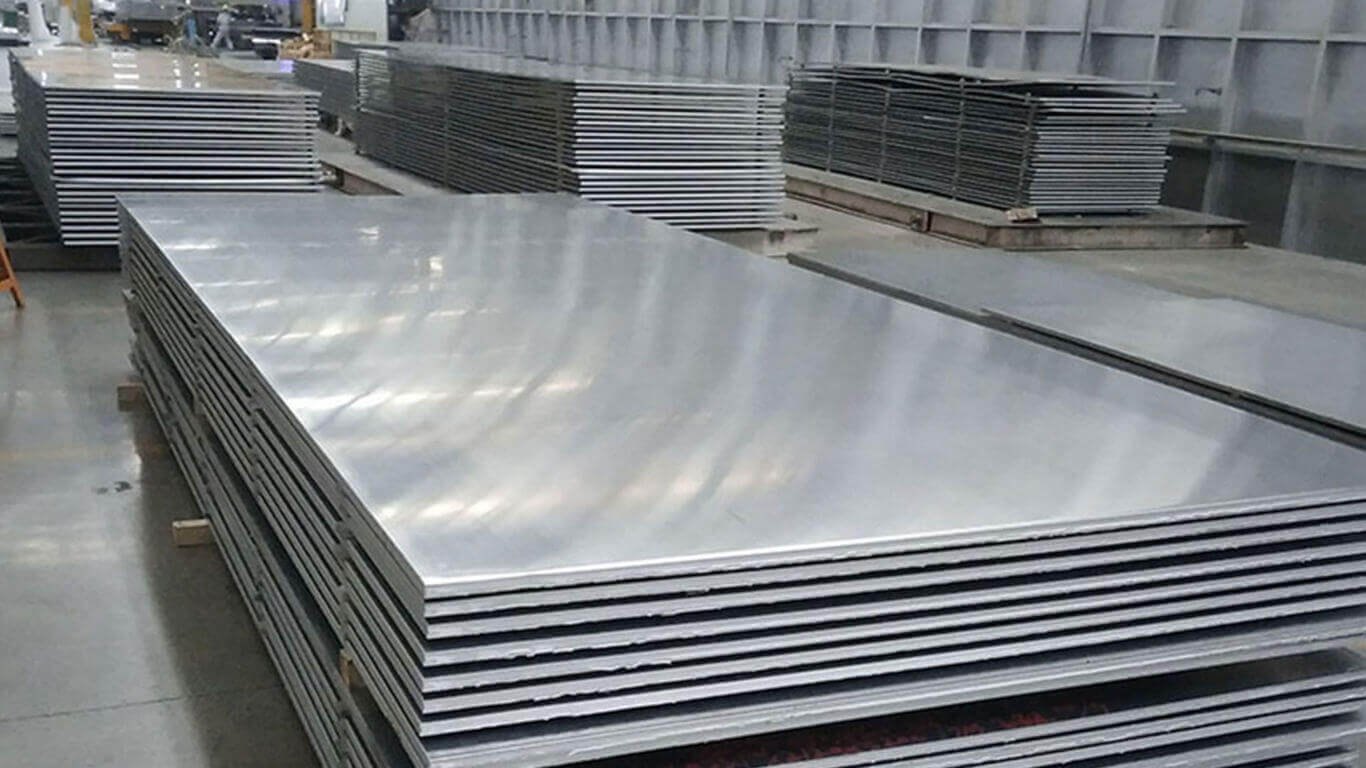
Injection moulds for glass-filled nylon use H900 630 plate; 40 HRC resists abrasive wear while thermal conductivity (18 W·m⁻¹·K⁻¹) speeds cycle times.
High-Strength Bolts & Fasteners
Hex bolts M24 achieve 1 100 MPa tensile after H900; magnetic property allows non-destructive inspection, and corrosion resistance suits outdoor structures without coating.
Gears, Cams & Actuators
Aerospace flap actuators use H925 630; core hardness 38 HRC resists galling against softer stainless steels while toughness prevents tooth fracture under shock loads.
Medical Instruments & Implants
Surgical drivers and external fixators use H900 630; biocompatibility meets ISO 5832-7, and passivation achieves Ra ≤ 0.2 µm mirror finish.
Comparison with Other Grades – 630 vs 304, 316, 410, 420, 17-7PH
| Grade | Type | Tensile MPa | Corrosion Rating | Heat Treatment | Relative Cost | Typical Uses |
|---|---|---|---|---|---|---|
| 304 | Austenitic | 515 | High | None | Medium | Food tanks |
| 316 | Austenitic | 620 | Very High | None | High | Marine |
| 410 | Martensitic | 1 000 | Medium | Quench & Temper | Low | Hardware |
| 420 | Martensitic | 1 380 | Low | Quench & Temper | Low | Cutlery |
| 17-7PH | PH Austenitic | 1 380 | High | Age | High | Springs |
| 630 | PH Martensitic | 1 310 | High | Age | Medium+ | Aerospace, oil & gas |
Pros: 630 Stainless Steel offers the highest strength-to-weight ratio of any standard stainless while retaining 304-level corrosion resistance and simple one-step aging.
Cons: Not suitable for prolonged exposure to >550 °C or strong reducing acids; for such cases select 316L or nickel alloys.
Manufacturing Process & Quality Assurance
We produce 630 Stainless Steel via vacuum-induction melting (VIM) and vacuum-arc remelting (VAR) for aerospace cleanliness, then forge or hot-roll to billet. Solution annealing at 1040 °C followed by water quench produces soft, machinable condition. Aging at 480 °C (H900) to 620 °C (H1150) precipitates nano-copper particles, raising hardness to 33–40 HRC. Finishes include hot-rolled annealed, peeled, centreless-ground and polished Ra ≤ 0.2 µm. Every heat is certified to ASTM A564/A693, AMS 5643, ISO 9001 and optional AS/EN 9100; tests include ICP chemistry, tensile at room and elevated temperature, Charpy impact, ASTM G48 pitting corrosion, ultrasonic cleanliness and grain size. Third-party inspection certificates accompany each shipment for direct aerospace PPAP submission.
Maintenance & Care Tips
Clean 630 Stainless Steel with warm water and neutral detergent; avoid chloride bleach. For marine service, periodic fresh-water rinsing removes salt deposits. Passivate in 2 % citric acid after machining to dissolve free iron. Do not expose aged (H900) parts to >550 °C for prolonged periods to avoid over-aging. Store bars indoors, vertically separated by plastic, to prevent carbon-steel contamination.
Frequently Asked Questions
Q: What is precipitation hardening in 630 Stainless Steel?
A: Aging at 480–620 °C precipitates nano-copper particles, raising strength from 1 000 MPa to 1 310 MPa without quenching or distortion.
Q: How does 630 compare to 304 in strength and corrosion?
A: 630 delivers 2.5× the strength of 304 with equivalent neutral-pH corrosion resistance, but requires aging and costs ~20 % more.
Q: What are the common aging conditions (H900, H1025, etc.)?
A: H900 (480 °C) gives max strength 1310 MPa; H1025 (550 °C) balances 1 070 MPa with 14 % elongation; H1150 (620 °C) maximises toughness and stress-corrosion resistance.
Ready to combine 1310 MPa strength with 304-class corrosion in one heat treatment? Contact us today for custom quotes on 630 Stainless Steel bar, plate or forged components—mill-direct pricing, global delivery and full metallurgical support included.