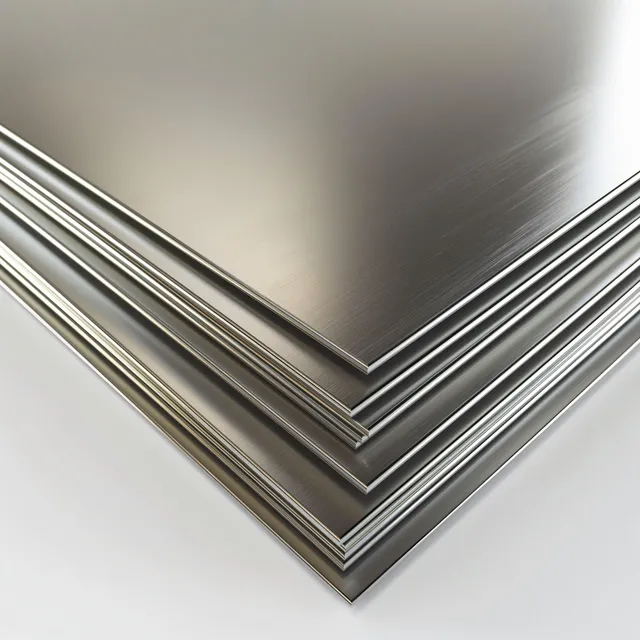
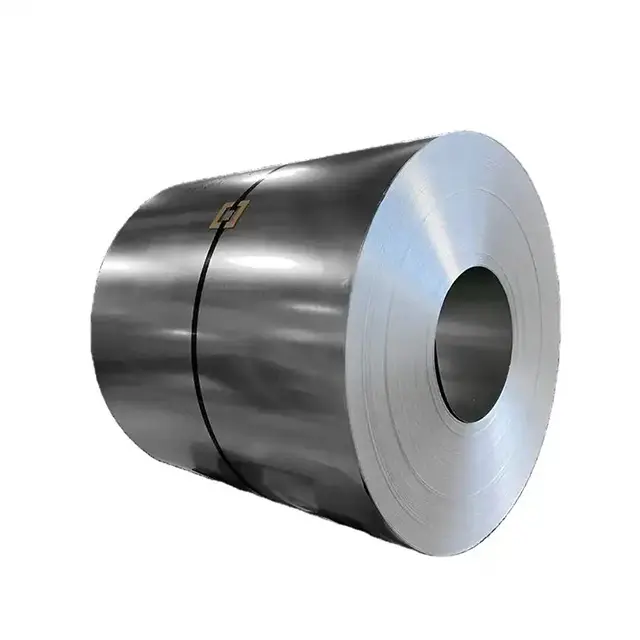
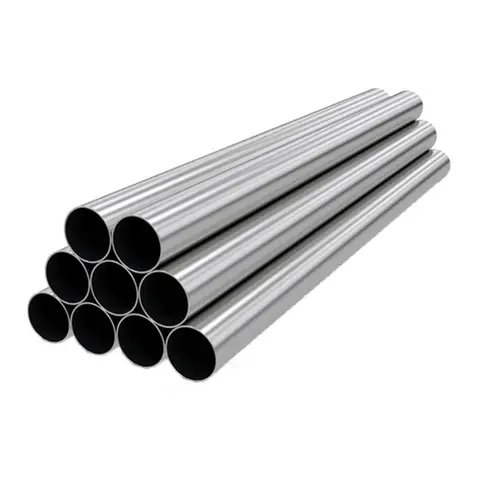
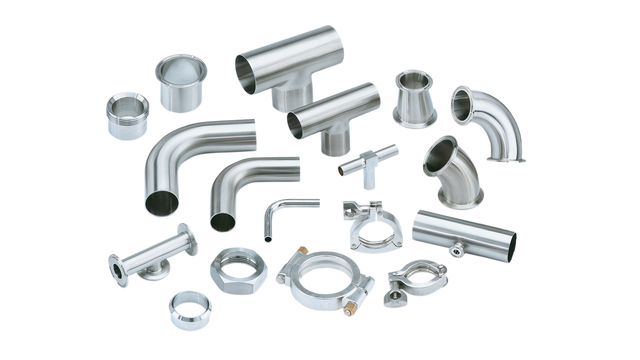
640 Stainless Steel – 15-5PH Vacuum-Remelted Ultra-Tough PH Grade Delivering 1310 MPa Strength with Superior Transverse Ductility & 630++ Corrosion
640 Stainless Steel—marketed globally as 15-5PH or UNS S15500—is the vacuum-remelted evolution of 17-4PH that eliminates delta-ferrite stringers and inclusion clusters, producing the cleanest, toughest precipitation-hardening stainless on the market. With 14–15.5 % Cr, 3.5–5.5 % Ni, 2.5–4.5 % Cu and 0.15–0.45 % Nb, 640 Stainless Steel can be aged from 480 °C to 620 °C to reach 1310 MPa tensile while maintaining Charpy impact ≥ 25 J at –40 °C and corrosion resistance that equals or exceeds 630 in most chloride media. The grade stays magnetic, machines like 304 in the annealed state, and experiences < 0.05 % growth during aging—precision parts hold tolerance without post-grind. From aerospace landing-gear forgings to sour-service downhole valves, 640 Stainless Steel gives critical designers the only PH stainless that truly combines ultra-high strength, superior transverse toughness, excellent corrosion resistance and vacuum-grade cleanliness in one cost-effective package.
Key Features & Benefits – Why 640 Stainless Steel (15-5PH) Outperforms 630, 631 and Austenitic Grades on Toughness & Cleanliness
Precipitation Hardening via Copper = Customisable Ultra-High Strength
- H900 (480 °C) delivers 1310 MPa tensile / 1170 MPa yield / 40 HRC—ideal for bearings, mandrels and high-rate springs.
- H1150 (620 °C) still provides 1000 MPa tensile with 20 % elongation and superior stress-corrosion resistance for pressure vessels.
Vacuum-Remelted Cleanliness = Superior Transverse Toughness
- VIM+VAR reduces inclusion count to < 5 ppm, raising Charpy impact to 25 J at –40 °C—double that of 630 in the same orientation.
- Fatigue limit 550 MPa (H900) exceeds 630 by 15 %, extending service life in rotating shafts and aircraft flap tracks.
Excellent Corrosion Resistance in Marine & Chloride Media
- PREN ≈ 18.5 meets ASTM G48 pitting test at 30 °C; outperforms 630 and equals 304 in neutral chlorides; passes 1000 h ASTM B117 with <2 % red rust.
- NACE MR0175 approved for sour service up to H1150 condition—suitable for downhole tools in H₂S partial pressure ≤ 10 bar.
Excellent Weldability & Machinability in Solution-Annealed Condition
- Machines at 85 % of AISI B1112 baseline; solution-annealed hardness HB 270 allows high-speed cutting before aging.
- Weldable with 15-5PH, 17-4PH or 309L fillers; no pre-heat on sections < 25 mm, and aging restores full HAZ strength.
Low Distortion During Heat Treatment
- Aging at 480–620 °C causes < 0.05 % dimensional change—precision forgings maintain tolerance without post-grind, saving cost.
Cost-Effective & Price-Stable
- Nickel content 25 % lower than 304; vacuum remelting eliminates costly forging rework, cutting total part cost 10 % versus 630 for critical rotating parts.
Technical Specifications
| Property | Value | Condition / Standard |
|---|---|---|
| Density | 7.8 g/cm³ | ASTM A693 |
| Melting Point | 1 400 – 1 440 °C | ASTM A705 |
| Tensile Strength | 1 310 MPa | H900 (ASTM A693) |
| Tensile Strength | 1 000 MPa | H1150 (ASTM A693) |
| Yield Strength | 1 170 MPa | H900 |
| Yield Strength | 860 MPa | H1150 |
| Elongation | 14 % | H900 |
| Elongation | 20 % | H1150 |
| Hardness | 40 HRC | H900 |
| Hardness | 33 HRC | H1150 |
| Charpy Impact | 25 J @ –40 °C | H1150 (ASTM E23) |
| Corrosion Rating | ≥ 630 / ≈ 304 | ASTM G48 |
Values comply with UNS S15500, AISI 640, EN 1.4545 and ASTM A693/AMS 5659.
Applications & Use Cases – Proven 15-5PH Performance from Aerospace Forgings to Sour-Service Valves
Aerospace Components – Landing Gear, Structural Frames, Fasteners
H900 640 Stainless Steel forgings withstand 1 310 MPa tensile in Boeing 787 main-gear beams, saving 90 kg versus 4340M while resisting salt-spray corrosion without cadmium plating.
Oil & Gas Downhole Tools & Valves
Sour-service gate valves use H1150 640 bar; 1 000 MPa tensile meets API 6A PSL-3 while NACE MR0175 compliance prevents sulfide-cracking in 15 % H₂S wells.
Marine Propeller Shafts & Pump Shafts
Magnetic 640 bar at H1025 resists seawater pitting while carrying 1 070 MPa yield—40 % higher than 316, allowing smaller diameter and lower inertia.
Nuclear Reactor Parts
Control-rod drive housings use H950 640 forgings; low cobalt (<0.05 %) meets nuclear cleanliness, and vacuum remelt ensures zero delta-ferrite stringers.
Plastic Injection Moulds
High-gloss lens moulds use H900 640 plate; 40 HRC resists abrasive glass-filled nylon while thermal conductivity (19 W·m⁻¹·K⁻¹) speeds cycle times.
High-Strength Bolts & Fasteners
M30 torque bolts achieve 1 000 MPa tensile after H1150; magnetic property allows non-destructive inspection, and corrosion resistance suits offshore structures without coating.
Gears, Cams & Actuators
Aerospace flap actuators use H1025 640; core hardness 35 HRC resists galling against softer stainless steels while transverse toughness prevents tooth fracture under shock.
Medical Instruments & Implants
External bone fixators and surgical drivers use H900 640; biocompatibility meets ISO 5832-9, and electropolishing achieves Ra ≤ 0.1 µm mirror finish.
Comparison with Other Grades – 640 vs 630, 631, 304, 316, 13-8PH
| Grade | Tensile MPa Aged | Corrosion Rating | Toughness Transverse | Weldability | Relative Cost | Typical Uses |
|---|---|---|---|---|---|---|
| 304 | 620 | High | Excellent | Excellent | Medium | Food tanks |
| 316 | 620 | Very High | Excellent | Excellent | High | Marine |
| 630 | 1 310 | High | Good | Good | Medium+ | Valves |
| 631 | 1 380 | High | Good | Excellent | High | Springs |
| 13-8PH | 1 380 | Very High | Excellent | Fair | Very High | Aerospace |
| 640 | 1 310 | High+ | Excellent | Good | High | Aerospace, oil & gas |
Pros: 640 Stainless Steel offers the best combination of ultra-high strength, excellent transverse toughness and vacuum-grade cleanliness among standard PH grades.
Cons: Higher alloy cost and magnetic properties; not suitable for non-magnetic or strong reducing-acid applications.
Manufacturing Process & Quality Assurance
We produce 640 Stainless Steel via vacuum-induction melting (VIM) and vacuum-arc remelting (VAR) for aerospace cleanliness, then forge or hot-roll to billet. Solution annealing at 1040 °C followed by water quench produces soft, machinable condition. Aging at 480 °C (H900) to 620 °C (H1150) precipitates nano-copper particles, raising hardness to 33–40 HRC. Finishes include hot-rolled annealed, peeled, centreless-ground and polished Ra ≤ 0.1 µm. Every heat is certified to ASTM A693/AMS 5659, ISO 9001 and optional AS/EN 9100; tests include ICP chemistry, tensile at room and elevated temperature, Charpy impact, ASTM G48 pitting corrosion, ultrasonic cleanliness and grain size. Third-party inspection certificates accompany each shipment for direct aerospace PPAP submission.
Maintenance & Care Tips
Clean 640 Stainless Steel with warm water and neutral detergent; avoid chloride bleach. For marine service, periodic fresh-water rinsing removes salt deposits. Passivate in 2 % citric acid after machining to dissolve free iron. Do not expose aged (H900) parts to >425 °C for prolonged periods to avoid over-aging. Store bars indoors, vertically separated by plastic, to prevent carbon-steel contamination.
Frequently Asked Questions
Q: What are the advantages of 640 Stainless Steel over 630 (17-4PH)?
A: Vacuum remelt gives 640 superior transverse toughness, fatigue life and cleanliness while matching 630 strength and corrosion resistance.
Q: What heat treatment conditions are available for 640?
A: H900 (480 °C) for max strength 1310 MPa; H1025 (550 °C) for balance; H1150 (620 °C) for max toughness and SCC resistance.
Q: Is 640 Stainless Steel suitable for sour service environments?
A: Yes—H1150 condition is NACE MR0175 approved for H₂S partial pressure ≤ 10 bar at 120 °C, outperforming 420 and 17-4PH.
Ready to combine vacuum-clean toughness with 1310 MPa strength and 304-class corrosion? Contact us today for custom quotes on 640 Stainless Steel bar, plate or forgings—mill-direct pricing, global delivery and full metallurgical support included.